China's Yunnan Province hopes to reach an annual output of 2 million tons (approx. 417 million gallons) of fuel ethanol by 2010, according to the province's fuel ethanol industry development plan released recently by the Yunnan Economic and Trade Commission, state media report.
Interfax China - August 23, 2007.
Seven companies have teamed up to create Kazakhstan's first Biofuel Association. Its aim is to integrate interested parties for creating favorable conditions to have the country’s biofuel industry developed. An initiator and coordinator of the Association is the National Holding KazAgro, the Agriculture Ministry’s press service informs.
KazInform - August 23, 2007.
Canadian forest products company Tembec today announced that it has completed the acquisition of the assets of Chapleau Cogeneration Limited located in Chapleau, Ontario. The transaction closed on August 15 and includes a biomass fired boiler and steam turbine with an installed capacity of 7.2 megawatts. Consideration for the assets consists of a series of future annual payments to 2022, with a present value of approximately $1 million.
Newswire Canada - August 22, 2007.
Taiwan's representative to Brazil, Chou Shu-yeh, is urging Taiwan's government and private enterprises to invest in Brazil's biomass energy sector. Chou was speaking at a workshop on global investment and trade opportunities in Taipei.
RTi - August 22, 2007.
An algae-to-biofuels startup by the name of Inventure Chemical has raised about $1.5 million to continue its development of a chemical process that turns algae into biodiesel and ethanol. One of the biggest backers of the company is Imperium Renewables, a biodiesel producer.
Seattle Post Intelligencer - August 22, 2007.
The government of India's Karnataka state has approved the blending of six million litres of ethanol with diesel for use as fuel in State Road Transport Corporation (KSRTC) vehicles.
Automotive World - August 21, 2007.
VeraSun Energy Corporation, one of America's largest ethanol producers, announced that it closed on its acquisition with ASAlliances Biofuels, LLC for three ethanol plants with a combined annual production capacity of approximately 330 million gallons (1.25 billion liters) per year.
VeraSun - August 21, 2007.
Fujitsu develops a biodegradable laptop chassis from corn-starch bioplastic. The material reduces carbon dioxide emissions by 15% compared to a chassis made from petroleum-based plastics.
CNET Asia - August 20, 2007.
India's Rana Sugars Ltd has decided to set up a new plant for producing ethanol in Uttar Pradesh with an estimated investment of €9 to 10.9 (US$12.2 to 14.7). The facility will have a capacity of 180,000 liters per year and will generate, besides ethanol, 26MW of carbon-neutral power from bagasse.
Economic Times India - August 20, 2007.
Prominent pro-democracy activists staged a rare protest in Myanmar's biggest city Sunday, marching against a massive recent fuel price hike. "We are staging this performance to reflect the hardship our people are facing due to the government's fuel price hike," said Min Ko Naing, a leader of the 88 Generation Students' Group. Myanmar's ruling military junta imposed a surprise 100 percent hike on fuel at state-owned gas stations on Wednesday. The move was followed by increases in bus fares and commodity prices.
The Star - August 19, 2007.
Canada's Cavendish Farms, one of the country's largest food processing companies is to build a biogas plant to recycle spent cooking oils, starch and sludge from its waste-water plant to fuel its potato processing operation. Use of the carbon-neutral biofuel will limit the amount of bunker C fuel oil currently in use by the company. The plant, expected to be ready for operation by next fall, has received a $14-million loan from the Province of Prince Edward Island.
CBC - August 18, 2007.
Basin Electric Power Cooperative told a U.S. Senate Energy Appropriations subcommittee that it is looking into capturing carbon dioxide from its Antelope Valley Station and sell it for enhanced oil recovery in the Williston Basin. Carbon capture technologies have not yet been applied to a power plant that uses lignite, or even subbitumious coal. The trial would be the first one to do so in the Midwest.
Bismarck Tribune - August 17, 2007.
The BBC World Service's current 'One Planet' programme focuses on revolutionary technologies and research that uses a next-generation of GM crops as factories for the production of new pharmaceuticals, green products and alternatives to petroleum-based chemicals.
One Planet - August 16, 2007.
Germany's Biogas Nord has been commissioned to construct a large multi-feed biogas plant with a capacity of 2.8 MW of electrical power in Romania. The value of the order is approximately €3.5 million. The plant will be built in the Transylvanian region close to the county town of Oradea. Interestingly, a synergy will be created by coupling the facility to the construction of a biodiesel plant. In so doing, the waste products resulting from the production of biodiesel, such as rapeseed pellets and glycerin, will be brought to the biogas plant as substrates.
Ad-Hoc News - August 16, 2007.
The University of Western Ontario's Research Park at Sarnia has received $10-million in funding for the development of biofuel technologies. The funds will be used for the creation of the 'Ontario Bioindustrial Innovation Centre' at the University, including the addition of a commercialization centre with incubator suites, laboratory equipment, pilot plant space and space for startup companies.
The Observer - August 16, 2007.
Philippine Bio-Sciences Co., Inc. (PhilBio) and its Clean Development Mechanism subsidiary in Cebu, has told the Central Negros Electric Cooperative (Ceneco) that it will soon open a 10 megawatt biogas plant in Cebu. According to the company, under current conditions electricity generated from biogas is around 20% less costly than that generated from fossil fuels.
Philippine Bio-Sciences - August 15, 2007.
Scientists, economists and policy experts representing government and public institutions from more than 40 countries will exchange the latest information on economic and technology opportunities at the U.S. Department of Agriculture's "Global Conference on Agricultural Biofuels: Research and Economics", to be held Aug. 20-21 in Minneapolis.
USDA ARS - August 14, 2007.
A company owned by the Chinese government has expressed interest in investing up to 500 million US dollars in a biofuel project in Indonesia. The company is planning to use jatropha as its raw material and is targeting an annual output of around 1 million tons.
Forbes - August 13, 2007.
Virgin Atlantic, Boeing and General Electric are within weeks of selecting the biofuel for a flight demonstration in the UK early next year. The conversion of biomass via the Fischer-Tropsch process is no longer amongst the biofuel candidates, because the process has already been demonstrated to work. Ground testing of the chosen fuel in a development engine at GE is expected to begin in October-November. The limited flight-test programme will involve burning biofuel in one GE CF6-80C2 engine on a Virgin Boeing 747-400.
Flight Global - August 13, 2007.
Japan's Economy, Trade and Industry Ministry said Saturday it plans to introduce a new preferential tax system in fiscal 2008 aimed at promoting a wider use of biofuel, which could help curtail greenhouse gas emissions. Under the envisaged plan, biofuel that has been mixed with gasoline will be exempt from the gasoline tax--currently 53.8 yen per liter--in proportion to the amount of biofuel included. If blended with diesel oil, biofuel will be free from the diesel oil delivery tax, currently 32.1 yen per liter.
Daily Yomiuri - August 13, 2007.
Buenos Aires based ABATEC SA announces the release of a line of small biodiesel plants with modular design, high temperature reaction for the best yield, to produce from 50 to 1000 gal/day (190 to 3785 liter/day) of high quality methylester and valuable glycerol.
PRWeb - August 10, 2007.
Vegetable growers in North Queensland are trying to solve the problem of disposing of polyethylene plastic mulch by using a biodegradable, bioplastic based alternative. Trials are a collaboration of the Queensland Department of Primary Industries with the Bowen District Growers Association.
Queensland Country Life - August 8, 2007.
Hawaii's predominant utility has won approval to build the state's first commercial biofuel plant. It is the first substantial new power generator that Hawaiian Electric Co. has added in 17 years. HECO will build the $142.3 million facility at Campbell Industrial Park on Oahu beginning early next year, and expects to begin commercial operation in mid-2009. It will run exclusively on fuels made from ethanol or biodiesel.
Star Bulletin (Honolulu) - August 8, 2007.
PetroSun Inc. announced today that it conducted its initial algae-to-biofuel program held at Auburn and Opelika, Alabama. The company intends to hold a series of these programs during August and September with biodiesel refiners and firms that are researching the use of algal oil as a potential feedstock for jet fuel production.
MarketWire - August 8, 2007.
To encourage Malaysia's private sector to generate energy from biomass resources, national electricity company Tenaga Nasional Bhd (TNB) has increased the purchase price of electricity produced from palm oil biomass waste to 21 sen per kilowatt hour from 19 sen now. According to Minister of Enegry, Water and Communications, Datuk Seri Dr Lim Keng Yaik the new price structure, under the Renewable Energy Power Purchase Agreement (REPPA), will be implemented immediately. Such projects are eligible for the Clean Development Mechanism. Under the 9th Malaysian Plan, the country's government aims to achieve the installation of 300MW and 50MW of grid-connected electric power from renewable energy sources in Peninsular Malaysia and Sabah, respectively.
Bernama - August 7, 2007.
Aspectrics, which develops encoded photometric infrared and near infrared spectroscopy, will be launching a new range of biofuels analyzers designed to meet the demands of scientists and analysts to carry out biodiesel quality control and analyze biodiesel blend percentages in real time.
Bioresearch Online - August 7, 2007.
Irish start-up Eirzyme has secured a €10m investment from Canadian company Micromill System. The new company will produce low-cost enzymes to convert biological materials such as brewers' grains into bioethanol and biogas.
RTE - August 6, 2007.
Imperium Renewables says it has a deal to provide Royal Caribbean Cruises with biodiesel. The Seattle-based biodiesel maker, which is scheduled to inaugurate its Grays Harbor plant this month, will sell the cruise line 15 million gallons of biodiesel in 2007 and 18 million gallons annually for four years after that. The Miami-based cruise line has four vessels that call in Seattle. It is believed to be the single-largest long-term biodiesel sales contract to an end user in the U.S.
Seattle Times - August 5, 2007.
A team of Carnegie Mellon University researchers report that the choices U.S. officials make today could limit how the nation's future energy needs are met and could cost consumers billions in idle power plants and associated infrastructure systems. Their findings about decisions on liquefied natural gas (LNG) are important for the bioenergy community because in the near future ultra-clean carbon-negative biomethane production could be fused with existing LNG production sites. Biopact will share preliminary results from a study on these options at the upcoming Sparks & Flames energy conference at which the organisation will chair a session on carbon-negative energy, part of the Gas Storage & Trading Summit (earlier post).
In the upcoming September 1 edition of the journal Environmental Science and Technology, Paulina Jaramillo, W. Michael Griffin and H. Scott Matthews compared the greenhouse gas as well as SOx, and NOx life-cycle emissions for different fossil fuel combinations used to generate electricity: natural gas, liquefied natural gas (LNG), synthetic natural gas (SNG) via coal gasification-methanation, and coal. The objective of this study was to compare the emissions of NG/LNG/SNG versus coal.
At first instance, their estimates suggest that with the current fleet of power plants, a mix of domestic NG, LNG, and SNG would have lower GHG emissions than coal. But if advanced technologies with carbon capture and sequestration (CCS) are used coal and a mix of domestic NG, LNG, and SNG would have very similar life-cycle GHG emissions. For SOx and NOx they find there are significant emissions in the upstream stages of the NG/LNG life-cycles, which contribute to a larger range in SOx and NOx emissions for NG/LNG than for coal and SNG. Thus, LNG imported from foreign countries and used for electricity generation could have 35 percent higher lifecycle greenhouse gas emissions than coal used in advanced CCS power plants.
Investing in LNG infrastructure today could make sense if it helps moderate natural gas prices and keeps existing natural gas power plants running. But making this investment ultimately locks us into certain technologies that make it harder for us to change paths in an increasingly carbon-constrained world. - H. Scott Matthews, associate professor in Carnegie Mellon's Civil and Environmental Engineering Department.
The 1990s saw a surge in construction of natural gas power plants, fueled by cheap natural gas, low investment requirements and the idea that natural gas was less carbon-intensive than coal. Since these plants were constructed, natural gas prices have skyrocketed as the North American natural gas supply has become more limited. These gas plants are now operating at a very low capacity, fueling the energy industry's interest in increasing gas supply by using LNG: energy :: sustainability :: Bioenergy with Carbon Storage :: biomass :: biogas :: fossil fuels :: coal :: natural gas :: LNG :: carbon capture and storage :: Those decisions are complicated by the fact that natural gas prices may stay high because of maturing North American gas fields. Natural gas production in North America has been flat or down in each of the past six years, according to the federal government's Energy Information Administration. Increasingly, domestic natural gas will be drawn from nontraditional and more expensive sources that require the development of more complex networks to extract and deliver it to the U.S. market.
However, the increased imports of LNG and all of its indirect impacts could eliminate the environmental benefits of natural gas over coal when future carbon mitigation technologies such as carbon capture and storage (CCS) are adopted.
The researchers point out that LNG has many indirect impacts compared to domestic gas. LNG is extracted in a foreign country, liquefied, put into a tanker to cross oceans, and then regasified and put into pipelines when it reaches the U.S. Each of these steps leads to indirect environmental impacts, such as carbon dioxide emissions from changing from gas to liquid and back. In addition, the facilities and tankers necessary to liquefy, move and regasify the natural gas expected are not plentiful and those in the works will not be up-and-running for several years.
The Carnegie Mellon research team also argues that the U.S. shouldn't rush to invest large amounts in a new infrastructure, such as the LNG infrastructure, without analyzing all the indirect implications of those investments compared to alternative supply options. In addition, utilities and the government should put more effort into conservation and energy efficiency that could help reduce the need for large investments. As the options grow more complicated, the choices become harder and harder.
Carbon-negative biomethane The Carnegie Mellon suggestions are fundamental, but they do not take into account the emergence of a new energy concept, based on coupling biogas production to LNG export infrastructrues. Biopact is currently conducting a basic lifecycle and economic feasibility assessment of the opportunity to produce biogas close to such existing LNG facilities. The concept consists of capturing and storing carbon dioxide from biogas which results in carbon-negative and ultra-clean biomethane (schematic, click to enlarge). This upgraded bio-based gas is then integrated into the existing LNG upstream.
Given the fact that separating CO2 from biogas before it is combusted is considerably less costly than capturing carbon from fossil fuels, we predict it might become a feasible option to couple biogas with CCS to existing LNG infrastructures. Storage of the carbon dioxide can occur in oil and gas fields to enhance the recovery of these resources, or in (onshore) saline aquifers which hold large potential and are found to be abundant near some of the largest current LNG sites in the Global South (more here: "Deep geological CO2 storage: principles, and prospecting for bioenergy disposal sites", *.pdf).
In December of this year, the United Nations Climate Change Conference will convene in Bali, Indonesia, to prepare the post-Kyoto future. This meeting will be crucial for the future of carbon markets. Some are working towards the adoption of measures that allow bioenergy producers to bank in on carbon-negative biofuels. It is within this context that the commercial feasibility of carbon-negative biogas production coupled to LNG will be determined. If enough voices favor a transition towards a global carbon market, then such projects might become profitable.
Biopact will share preliminary results of its assessment at the upcoming Sparks & Flames energy conference at which the organisation will chair a session on carbon-negative energy, part of the Gas Storage and Trading Summit.
The Carnegie Mellon insights on the GHG emissions of LNG might have to be adapted with these new perspectives in mind, and vice-versa.
On another note, even though co-firing biomass with coal is already practised on a relatively large scale in Europe, the study did not look at the use of biomass in CCS-power plants.
Some interesting numbers come from Thailand, where Bangchak Petroleum Plc plans to invest between 900 million and 1 billion baht (€20.5-22.8/$27.8-30.9 million) to build a biodiesel plant by the end of this year.
Patiparn Sukorndhaman, Bangchak's senior executive vice-president, told reporters that biodiesel produced locally costs 70 satang (70 cents) per litre less than conventional diesel. Since 2005, diesel has seen a continuous price hike, with the government feeling the pinch of subsidizing the fuel. First-generation biodiesel being competitive at current prices, Sukorndhaman thinks the alternative fuel will become increasingly popular locally.
Starting in April next year, the Thai government will call on local oil companies to switch all their diesel products to B2, a blend of 2% biodiesel and 98% diesel fuel. The move would encourage and build up confidence among motorists to use the much cheaper B5 fuel currently marketed by Bangchak Petroleum. Bangchak Petroleum offers B5 at 300 of its fuel stations and is planning to increase the number to 500 before the end of 2007.
A recent project coordinated by the Thai government and executed by Bangchak Petroleum in the city Chiang Mai, saw 1,300 public-transport buses utilizing unsubsidized B2, which was 0.5 bath per liter less costly than diesel (overview of this and other projects).
The biodiesel currently produced by the company relies on waste vegetable oils. Bangchak Petroleum has opened units to buy used vegetable oils from towns and communities for the production of biodiesel at its oil refinery in Sukhumvit. It also sources waste oil from various markets in Bangkok.
Bangchak Petroleum's new plant, with a daily production capacity of 300,000 litres per day (78,000 gallons), will use waste and palm oil. It is scheduled to be completed within 20-23 months. The plant would be located near Bangchak's existing oil storage facilities in Bang Pa-in, Ayutthaya (see map, click to enlarge), to save the company's logistics cost: energy :: sustainability :: ethanol :: biodiesel :: biomass :: bioenergy :: biofuels :: Thailand :: Bangchak is now the leader in Thailand's biodiesel market, with a share of 78.6% of total market volume of 30 million litres per month, followed by PTT Plc with 21.4%. Patiparn said the company's biodiesel production output rose by 47% to 28.7 million litres per month over the past six months.
Of the total investment in the new plant, up to 300 million baht would come from the company's capital and the rest from loans, which would lift its debt-to-equity ratio to two times from 0.6 currently.
Patiparn said Bangchak forecast its total revenue would grow 15% this year to 107.57 billion baht although its gross refining margin would decline to below US$2.90 per barrel this year on average compared to more than $3 per barrel on average last year.
The revenue growth would be contributed by the company's promising exports of fuel oil, which account for 30% of its total output, to China. This year, it will ship around 25,000 barrels per day of fuels to China, almost double the 14,000 barrels per day last year. The export price is now around $8-10 per barrel.
Nevertheless, the exports would have to be terminated in the fourth quarter when its product quality improvement (PQI) facilities have been completed. The facilities will transform fuel oil into more lucrative lighter fuel products including gasoline and diesel.
Bangchak will shut down two-thirds of its production capacity for 12 days in February next year, which will cause its capacity to decrease to 40,000-50,000 barrels per day from 70,000 barrels currently.
Bangchak now ranks fourth in the local fuel retail market, with a 12.5% share or 180 million litres per month, after PTT (32.9%), Esso (17.5%), and Shell (15.9%).
The company is also investing in the production of ethanol made from cassava. References: Bangchak Petroleum: renewable energy.
U.S. Agriculture Secretary Mike Johanns yesterday announced the award of US$97 million in guaranteed loans to help businesses in Georgia, Illinois and North Carolina create jobs and develop bioenergy systems.
The four recipients received funding through the United States Department of Agriculture's Renewable Energy and Energy Efficiency (Section 9006) guaranteed loan program and the Business and Industry (B&I) guaranteed loan program. The Section 9006 program provides financial assistance to agricultural producers and rural small businesses to install renewable energy projects or make energy efficiency improvements. The Business and Industry program complements the existing private credit structure by guaranteeing loans that will provide lasting community and economic benefits, such as for business expansions.
The selected projects include:
Clean Burn Fuels LLC of North Carolina, which was approved to receive $10 million from the Section 9006 program and a $25 million B&I loan guarantee to construct a new first generation ethanol plant that is expected to produce 60 million gallons (227 million liters) of ethanol per year. The plant has potential room for expansion to 220 million gallons (832 million liters) per year. Clean Burn Fuels expects work to begin in the second quarter of 2007.
Blackhawk Biofuels LLC, Illinois, is approved for a $7.5 million Section 9006 loan and a $20 million B&I loan to build and operate a 30-million-gallon (114 million liters) first generation biodiesel facility. Soybean oil, other vegetable oils, and possibly animal fat will be used as feedstocks.
Appling County Pellets from Georgia is approved to receive a $10 million Section 9006 loan and a $9.5 million B&I loan to produce up to 130,000 metric tons of wood pellets to be sold in domestic and international markets.
National Trail Biodiesel, Illinois, also approved to receive a $10 million Section 9006 loan and a $5 million B&I loan to build and operate a 30-million-gallon-per-year (114 million liters) biodiesel production facility in Jasper County. The plant will use soy oil.
USDA Rural Development's mission is to increase economic opportunity and improve the quality of life for rural residents: energy :: sustainability :: bioenergy :: biofuels :: ethanol :: biodiesel :: biomass :: wood pellets :: Rural Development has invested more than $76.8 billion since 2001 for equity and technical assistance to finance and foster growth in homeownership, business development, and critical community and technology infrastructure.
These funds are part of USDA's ongoing commitment to bring greater economic opportunities to rural citizens. They will help rural communities create jobs and strong, competitive business enterprises. - Mike Johanns, U.S. Agriculture Secretary
More than 1.5 million jobs have been created or saved through these investments.
Canada's new government announced it is investing $992,563 in 12 projects designed to help the nascent biofuels industry in Quebec. Through the Biofuels Opportunities for Producers Initiative (BOPI), organizations will receive funding to conduct feasibility studies and develop business plans for biofuel projects.
BOPI is a two-year $20 million commitment by Canada's new government designed to provide farmers and rural communities with opportunities to participate in, and benefit from, increased Canadian biofuels production. The initiative helps agricultural producers and others develop sound business proposals, as well as undertake feasibility or other studies to support the creation and expansion of biofuel production capacity. It is delivered through the industry councils in each province and territory that administer Agriculture and Agri-food Canada's Advancing Canadian Agriculture and Agri-Food Program.
On July 5, 2007, Prime Minister Harper announced that the government will provide up to $1.5 billion over nine years to support the production of renewable fuels. In addition, since coming to office, Canada's New Government has announced it will invest $500 million in biofuels and bio-products initiatives to assist farmers and rural communities to seize new market opportunities in the bioeconomy (earlier post).
Canada aims for a 5 percent average renewable fuel content in transportation fuels by 2010 and intends to regulate a 2 percent requirement for renewable content in diesel fuel and heating oil by 2012.
$300,000 to the Federation des producteurs de bovins du Quebec to develop engineering phases leading to the construction of an integrated facility for processing slaughter and dead animal by-products into biofuel.
$187,808 to Nutrinor, Cooperative agroalimentaire du Saguenay, Lac St-Jean to develop a business plan and required studies for construction of a biodiesel microproduction facility.
$108,800 to Societe 9043-3616 Quebec inc. St-Alexis-de-Montcalm - Lanaudiere to develop a feasibility study and business plan for the construction of a biofuel facility from existing infrastructures.
$98,393 to Potager Meunier inc., St-Roch-de-L'Achigan - Lanaudiere to develop a feasibility study concerning the construction of a pilot ethanol and by-products production facility from willow crops:
$71,561 to the Federation des producteurs de cultures commerciales du Quebec to position grain producers in Quebec and facilitate their uptake of biofuel market opportunities.
$70,256 to the Ferme Gaston Roy, Sainte-Marguerite to develop a feasibility study for a biodiesel production unit in the Quebec City region.
$42,999 to La Cooperative federee du Quebec, Montreal to contribute to the gathering of information for the preparation of a biofuel development policy and feasibility study for the production of ethanol and biodiesel.
$39,375 to Serge Quintal, Saint-Ignace-de-Standbridge to develop a feasibility study and production of a business plan for the construction of a biodiesel production plant.
$23,800 to the Syndicat des producteurs de cultures commerciales du Centre-du-Quebec to develop a feasibility study concerning biodiesel production from oilcrops oil.
$19,580 to the Institut de recherche et de developpement en agroenvironnement, Ste-Foy to determine the potential for biomass production from various vegetable species and the quality of their ligno-cellulosic complex for ethanol processing.
$16,000 to Les Huiles naturelles d'Amérique, Les Cèdres to develop a feasibility study for biofuel production in a small-size facility, Suroît region (in the western Montérégie).
$13,991 to Coopérative agricole Profid'Or, Joliette - Lanaudière to develop a feasibility study concerning the construction of an ethanol production facility from sugar beet.
Christian Paradis, Secretary of State for Agriculture announced the investment on behalf of the Gerry Ritz, Minister of Agriculture and Agri-Food and Minister for the Canadian Wheat Board. He said: "Canada's New Government is helping to ensure that producers are able to participate in and benefit from increased biofuels production in Canada. The renewable energy industry holds great potential for enhancing the economic prosperity of Quebec."
For his part, Mr. Laurent Pellerin, Chair of the Conseil pour le developpement de l'agriculture du Quebec (CDAQ), which administers the BOPI program in Quebec said: "Through their involvement in developing biofuels, Quebec's farm producers have once again shown that they share the environmental concerns of their fellow citizens while exploring new markets,"
Background The Government of Canada is committed to establishing regulations that will require 5 percent average renewable fuel content in transportation fuels by 2010 and intends to regulate a 2 percent requirement for renewable content in diesel fuel and heating oil by 2012. Agriculture and Agri-Food Canada (AAFC) wants to ensure that these targets are implemented in ways that result in the greatest possible benefit to the agricultural sector, including ownership of biofuels production facilities by agricultural producers.
On July 17, 2006, Canada's New Government announced $10 million in funding for the Biofuels Opportunities for Producers Initiative (BOPI) to be delivered through the industry councils in each province and territory that administer the Advancing Canadian Agriculture and Agri-Food (ACAAF) Program.
Due to the high demand from producers and industry, on March 3, 2007, Canada's New Government announced an additional $10 million in BOPI funding. An additional $3 million was made available last fiscal year to fund additional projects and $7 million is being provided this fiscal year (2007-2008) for new BOPI project proposals, bringing the total up to $20 million over the two fiscal years.
The BOPI, delivered through the industry councils in each province/territory that administer AAFC's ACAAF Program, was developed to help meet this goal. Individual project funding is capped at $300,000 and at least 25 per cent of the project cost must be provided by the industry, of which one third must come from producers.
BP Australia and Manildra Energy Australia announced today one of Australia’s largest biofuels supply agreements, a deal which will result in nearly half of BP’s fuel sales in New South Wales containing renewable ethanol.
BP will receive from Manildra’s Bomaderry ethanol plant 40 million litres of ethanol over the next year, with deliveries to commence this month. The agreement with Manildra combined with BP’s existing 15 million litre ethanol supply deal with CSR makes BP the largest marketer of biofuels in Australia.
Both BP and Manildra have also commenced negotiations to extend the agreement for a further two years.
BP’s ethanol fuel blend has the following properties and will be marketed as follows:
The new BP Unleaded 91 is a specially formulated 91 octane unleaded petrol blended with up to 10% renewable ethanol.
BP will offer new BP Unleaded 91 to New South Wales motorists at a three cents per litre discount through the company’s Biorewards program.
By the end of the year (2007) all of the 50 BP branded service stations in New South Wales will be selling new BP Unleaded petrol in place of regular Unleaded petrol.
The ethanol will be blended at the Newcastle and Parramatta fuel terminals to result in the BP Unleaded 91 fuel that will be sold across New South Wales. BP is investing approximately $4 million to enable the delivery, storage and blending of ethanol to take place at both of these terminals. The new facilities at BP’s Newcastle Terminal commenced operation earlier this month, with Parramatta’s facilities to be operational towards the end of this year.
BP has been marketing ethanol blended fuel in Queensland since 2001 and will now be able to commence the rollout to BP branded service stations in New South Wales, with the fuel to be available at about 50 additional locations by the end of the year. Over the next few years BP’s planned rollout of ethanol blended fuel in New South Wales will see this number of service stations at least doubling: energy :: sustainability :: ethanol :: biomass :: bioenergy :: biofuels :: fuel distribution :: Australia :: BP Australia's president said that the company’s actions demonstrated its commitment to create a sustainable future for biofuels in Australia.
Increasing the supply of biofuels is part of BP’s long term strategy to provide Australian motorists with the choice of a range of cleaner fuels. Selling more ethanol blended fuel at more service stations is just one part of our strategy. Supplying large volumes of biofuels also requires large scale supply agreements and the investment in necessary infrastructure. - Gerry Hueston, BP Australia President
Getting all three necessities in place has required considerable work over the past year. This commitment from BP has ensured that today’s announcement ticks all of the boxes for bringing biofuels into the mainstream in a way that ensures it is around to stay.
Manildra is a major Australian producer of food grade and industrial alcohol for the chemical and pharmaceutical industries.
Hydrogen may prove to be the fuel of the future in powering the efficient, eco-friendly fuel cell vehicles of tomorrow. The clean gas can be made from renewables such as biomass, wind and solar. However, developing a method to safely store, dispense and easily 'refuel' the vehicle's storage material with hydrogen has baffled researchers for years. A new and attractive storage medium being developed by Pacific Northwest National Laboratory scientists may provide the 'power of pellets' to fuel future transportation needs.
The Department of Energy's Chemical Hydrogen Storage Center of Excellence is investigating a hydrogen storage medium that holds promise in meeting long-term targets for transportation use. As part of the center, PNNL scientists are using solid ammonia borane (NH3BH3), or AB, compressed into small pellets to serve as a hydrogen storage material. Each milliliter of AB weighs about three-quarters of a gram and harbors up to 1.8 liters of hydrogen. Researchers expect that a fuel system using small AB pellets will occupy less space and be lighter in weight than systems using pressurized hydrogen gas, thus enabling fuel cell vehicles to have room, range and performance comparable to today's automobiles.
With this new understanding and our improved methods in working with ammonia borane, we're making positive strides in developing a viable storage medium to provide reliable, environmentally friendly hydrogen power generation for future transportation needs. - Dave Heldebrant, PNNL
A small pellet of solid ammonia borane (240 mg), as shown in the picture, is capable of storing relatively large quantities of hydrogen (0.5 liter) in a very small volume: energy :: sustainability :: biomass :: bioenergy :: renewables :: biohydrogen :: hydrogen storage :: ammonia borane :: PNNL scientists are learning to manipulate the release of hydrogen from AB at predictable rates. By varying temperature and manipulating AB feed rates to a reactor, researchers envision controlling the production of hydrogen and thus fuel cell power, much like a gas pedal regulates fuel to a car's combustion engine.
Once hydrogen from the storage material is depleted, the AB pellets must be safely and efficiently regenerated by way of chemical processing. This 'refueling' method requires chemically digesting or breaking down the solid spent fuel into chemicals that can be recycled back to AB with hydrogen.
Earlier, other scientists found a way to convert carbohydrates directly into biohydrogen using synthetic enzymes. Their findings may one day allow us to store dry starch as a biofuel in our gas cars, which would be an equally safe way to 'store' hydrogen - or at least its feedstock (earlier post).
Image: A small pellet of solid ammonia borane (240 mg), as shown, is capable of storing relatively large quantities of hydrogen (0.5 liter) in a very small volume. Credit: Pacific Northwest National Laboratory
References: Donald M. Camaioni, David J. Heldebrant, John C. Linehan, Wendy J. Shaw, Jun Li, Daniel L. DuBois, and Tom Autrey; "Toward regenerating ammonia borane from spent fuel” (FUEL 137), 234th American Chemical Society National Meeting, Boston - August 21, 2007.
David J. Heldebrant, Tom Autrey, John C. Linehan, Donald M. Camaioni, Scot D. Rassat, and Feng Zheng; “Effect of additives on the thermolysis of ammonia borane” (FUEL 164), 234th American Chemical Society National Meeting, Boston - August 21, 2007.
International research effort underway to sequence cassava genome, which may result in increased starch yields - USDA Agricultural Research Service - Aug. 30, 2006
Cassava has one of the highest rates of CO2 fixation and sucrose synthesis for any C3 plant. With this in mind, researchers from Ohio State University develop transgenic cassava with starch yields up 2.6 times higher than normal plants by increasing the sink strength for carbohydrate in the crop. This means cassava makes for a 'super crop' when it comes to both CO2 fixation and carbohydrate production, i.e. sugars, the feedstock for ethanol - Plant Biotechnology Journal - Volume 4/Issue 4 - July 2006
Vietnam's Institute of Tropical Biology to invest in Jatropha research - Le courrier du Vietnam - Sept. 6, 2006
Genetic study proves humans have pushed orangutans to the brink of extinction; genetic decline coincides with establishment of oil palm plantations in Malaysia/Indonesia since the 1950/60s- Public Library of Science / Biology, Volume 4/Issue 2 - February, 2006
Synthetic Genomics and the Asiatic Centre for Genome Technology Sdn Bhd (ACGT) have created a multi-year research and development joint venture to sequence and analyze the oil palm genome. In-depth genomic analyses will be followed by subsequent studies that will analyze the oil palm’s root and leaf microbial communities, to identify biomarkers and metabolic pathways that affect the plant's growth and viability. Biopact - July, 2007
Researchers at the International Institute for the Semi-Arid Tropics have developed a sweet sorghum for the production of ethanol. The new variety has a very high sugar content in its root. Average yields in trial fields in the Philippines were between 95 to 125 tons, considerably higher than those of sugarcane - ICRISAT - Feb. 28, 2007
Sokoine University of Agriculture, Tanzania, develops sorghum and millet processing technologies suitable for local conditions in effort to empower small farmers - IPP Media - Sept. 6, 2006
South Africa blocks GM Sorghum project for fears over contamination of local wild sorghums - Kruger Park - Aug. 26, 2006
Brazilian authorities have given their fiat for field trials with genetically modified sugar cane plants. The Centro de Tecnologia Canavieira (Cane Technology Center - CTC) will test three genetically modified varieties that are expected to yield 15% more sugar - GMO Compass
The International Eucalyptus Genome Consortium's sequencing effort has been taken up as a project under the U.S. Dept. of Energy's Joint Genome Project for the year 2008. - Biopact June 12, 2007
Brazilian state of Acre intends to make cattle ranchers reforest land which they have cleared for grazing. The sustainable forestry policy is based on replanting economic tree crops such as mahogany, acai, Brazil nut and palms - BBCNews Sept. 27, 2006
Illegal deforestation of acacia for charcoal is becoming a serious problem in Kenya's Naivasha area. Nobel Peace Prize laureate Wangari Maathai's Green Belt Movement re-afforests with acacia but needs more support to win fight against illegal loggers - Kenya Times Sept. 5, 2006
Australian scientists are conducting a 'time-machine' experiment to see how eucalyptus trees cope with increased levels of CO2 and global warming. - University of Western Sydney Aug. 28, 2006
Bamboo planting can slow deforestation, scientists from the International Center for Research in Agroforestry in Nairobi, Kenya, say. Bamboo rapidly becoming economically beneficial crop with large potential for energy, bioremediation, and afforestation - Chosun (S.Korea) Aug. 30, 2006
"The beauty of miscanthus is that you only have to sow it once...Because of the way it grows, there is no need for fertilisers or chemicals", an English entrepreneur talks about his experience with Miscanthus as an energy crop - Grantham Today Aug. 8, 2006

 China's Yunnan Province hopes to reach an annual output of 2 million tons (approx. 417 million gallons) of fuel ethanol by 2010, according to the province's fuel ethanol industry development plan released recently by the Yunnan Economic and Trade Commission, state media report.

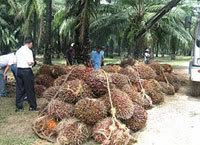 Some interesting numbers come from Thailand, where Bangchak Petroleum Plc plans to invest between 900 million and 1 billion baht (€20.5-22.8/$27.8-30.9 million) to build a biodiesel plant by the end of this year.
 energy :: sustainability :: ethanol :: biodiesel :: biomass :: bioenergy :: biofuels :: Thailand ::
 Hydrogen may







Wednesday, August 22, 2007
Researchers look at impacts of fossil fuel choices; find LNG to have high carbon footprint
In the upcoming September 1 edition of the journal Environmental Science and Technology, Paulina Jaramillo, W. Michael Griffin and H. Scott Matthews compared the greenhouse gas as well as SOx, and NOx life-cycle emissions for different fossil fuel combinations used to generate electricity: natural gas, liquefied natural gas (LNG), synthetic natural gas (SNG) via coal gasification-methanation, and coal. The objective of this study was to compare the emissions of NG/LNG/SNG versus coal.
At first instance, their estimates suggest that with the current fleet of power plants, a mix of domestic NG, LNG, and SNG would have lower GHG emissions than coal. But if advanced technologies with carbon capture and sequestration (CCS) are used coal and a mix of domestic NG, LNG, and SNG would have very similar life-cycle GHG emissions. For SOx and NOx they find there are significant emissions in the upstream stages of the NG/LNG life-cycles, which contribute to a larger range in SOx and NOx emissions for NG/LNG than for coal and SNG. Thus, LNG imported from foreign countries and used for electricity generation could have 35 percent higher lifecycle greenhouse gas emissions than coal used in advanced CCS power plants.
The 1990s saw a surge in construction of natural gas power plants, fueled by cheap natural gas, low investment requirements and the idea that natural gas was less carbon-intensive than coal. Since these plants were constructed, natural gas prices have skyrocketed as the North American natural gas supply has become more limited. These gas plants are now operating at a very low capacity, fueling the energy industry's interest in increasing gas supply by using LNG:
Those decisions are complicated by the fact that natural gas prices may stay high because of maturing North American gas fields. Natural gas production in North America has been flat or down in each of the past six years, according to the federal government's Energy Information Administration. Increasingly, domestic natural gas will be drawn from nontraditional and more expensive sources that require the development of more complex networks to extract and deliver it to the U.S. market.
However, the increased imports of LNG and all of its indirect impacts could eliminate the environmental benefits of natural gas over coal when future carbon mitigation technologies such as carbon capture and storage (CCS) are adopted.
The researchers point out that LNG has many indirect impacts compared to domestic gas. LNG is extracted in a foreign country, liquefied, put into a tanker to cross oceans, and then regasified and put into pipelines when it reaches the U.S. Each of these steps leads to indirect environmental impacts, such as carbon dioxide emissions from changing from gas to liquid and back. In addition, the facilities and tankers necessary to liquefy, move and regasify the natural gas expected are not plentiful and those in the works will not be up-and-running for several years.
The Carnegie Mellon research team also argues that the U.S. shouldn't rush to invest large amounts in a new infrastructure, such as the LNG infrastructure, without analyzing all the indirect implications of those investments compared to alternative supply options. In addition, utilities and the government should put more effort into conservation and energy efficiency that could help reduce the need for large investments. As the options grow more complicated, the choices become harder and harder.
Carbon-negative biomethane
Given the fact that separating CO2 from biogas before it is combusted is considerably less costly than capturing carbon from fossil fuels, we predict it might become a feasible option to couple biogas with CCS to existing LNG infrastructures. Storage of the carbon dioxide can occur in oil and gas fields to enhance the recovery of these resources, or in (onshore) saline aquifers which hold large potential and are found to be abundant near some of the largest current LNG sites in the Global South (more here: "Deep geological CO2 storage: principles, and prospecting for bioenergy disposal sites", *.pdf).
In December of this year, the United Nations Climate Change Conference will convene in Bali, Indonesia, to prepare the post-Kyoto future. This meeting will be crucial for the future of carbon markets. Some are working towards the adoption of measures that allow bioenergy producers to bank in on carbon-negative biofuels. It is within this context that the commercial feasibility of carbon-negative biogas production coupled to LNG will be determined. If enough voices favor a transition towards a global carbon market, then such projects might become profitable.
Biopact will share preliminary results of its assessment at the upcoming Sparks & Flames energy conference at which the organisation will chair a session on carbon-negative energy, part of the Gas Storage and Trading Summit.
The Carnegie Mellon insights on the GHG emissions of LNG might have to be adapted with these new perspectives in mind, and vice-versa.
On another note, even though co-firing biomass with coal is already practised on a relatively large scale in Europe, the study did not look at the use of biomass in CCS-power plants.
References:
Jaramillo, P.; Griffin, W. M.; Matthews, H. S., "Comparative Life-Cycle Air Emissions of Coal, Domestic Natural Gas, LNG, and SNG for Electricity Generation", Environ. Sci. Technol. 2007; ASAP Article; DOI: 10.1021/es063031o
Haszeldine, R. S.,"Deep geological CO2 storage: principles, and prospecting for bioenergy disposal sites", Draft for Paris IEA meeting - September 24, 2004
Biopact: Pre-combustion CO2 capture from biogas - the way forward? - March 31, 2007.
Article continues
posted by Biopact team at 11:14 PM 1 comments links to this post