
 Taiwan's Feng Chia University has succeeded in boosting the production of hydrogen from biomass to 15 liters per hour, one of the world's highest biohydrogen production rates, a researcher at the university said Friday. The research team managed to produce hydrogen and carbon dioxide (which can be captured and stored) from the fermentation of different strains of anaerobes in a sugar cane-based liquefied mixture. The highest yield was obtained by the Clostridium bacterium.

Petrobras reaffirms its biofuels and energy partnership in Mozambique
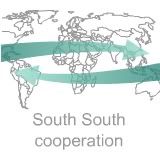 Executives of Brazil's state-owned oil company Petrobras have visited Mozambique to reaffirm their commitment to cooperate with the country on energy and biofuels. International Area director, Nestor Cervero, and executive manager for Business Development, Luis Carlos Moreira da Silva, were received, last week, by Mozambican President Armando Emílio Guebuza. The courtesy visit reiterates Petrobras' willingness to work jointly with Mozambican companies in oil and gas prospecting and in the biofuel area.
The executives visited Mozambique's Ministry of Energy and its National Oil Company. During the meeting, the possible partnership between Petrobras and Petromoc, the Mozambican company equivalent to Petrobras Distribuidora in Brazil, was reaffirmed. The idea is to operate in the Mozambican biofuel market and, possibly, in fuel exports.
President Guebuza is expected to visit Brazil next September, when he will meet his Brazilian counterpart, president Luiz Inácio Lula da Silva, and Petrobras' president José Sergio Gabrielli de Azevedo, to sign an agreement between the two governments in the energy area.
Petrobras is already in business in Mozambique with the Empresa Nacional de Hidrocarbonetos (ENH), that country's national oil company, since last year. A memorandum of understandings was signed on that occasion for oil and natural gas exploration and for biofuel research and production in Mozambican territory (earlier post). The company also has a partnership with Petronas, from Malaysia, to work in an exploration block in the mouth of River Zambezi, in Mozambique.
Mozambique is receiving considerable interest from biofuel investors, because of its stable economy, attractive investment climate and above all, its major technical biofuel production potential:
 energy :: sustainability :: ethanol :: biodiesel :: biomass :: bioenergy :: biofuels :: Brazil :: Mozambique ::
 Experts working for the International Energy Agency estimate that Mozambique alone can produce nearly 7 Exajoules worth of liquid biofuels for exports, without threatening food supplies for its rapidly growing population or biodiversity and protected conservation areas (more here).
This amount is roughly equal to a production of 3 million barrels of oil equivalent per day (and given its renewability, this 'green reserve' lasts for decades). In order to actualise the potential, the country does need an influx of investments in agronomic knowledge and skills, logistical infrastructures and biofuel production plants. On all these fronts, the Lusophone world is offering assistance, either trilaterally or bilaterally, in purely private or in public-private ventures.
Mozambique's Minister of Energy, Salvador Namburete, has frequently pointed out that the country vast potential to cultivate first generation biofuels based on oilseed, sugar and starch crops in an initial phase, whereas when technologies mature, it can become a major producer of biomass.
Besides investors from Brazil, several initiatives from Europe, India and China have been launched in the country's biofuels sector (earlier post and here). Amongst them is a typical South-North-South exchange which sees Italy and Brazil cooperating on biofuels in Mozambique.
References:
Petrobras: Petrobras reaffirms its partnership in Mozambique - August 8, 2007.
Biopact: Mozambique-India partnership: biofuels for poverty alleviation - July 03, 2007
Biopact: Lusophone world and China join forces to produce biofuels in Mozambique - May 19, 2007
Article continues
posted by Biopact team at 1:14 PM
0 comments
links to this post


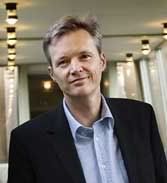 Sweden is seen by many as a European leader in efforts to tackle climate change and to transit towards a low-carbon, post-oil economy. The country is a staunch advocate of internationally traded biofuels, because they allow developing countries to participate as producers in a new market that offers major opportunities for economic and social development. Sweden's minister of foreign trade Sten Tolgfors writes a piece for
  Permafrost – the perpetually frozen foundation of North America and Siberia – isn’t so permanent anymore, and scientists are
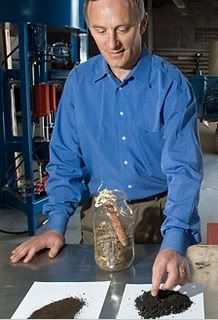 The vision behind the emerging bioeconomy is the creation of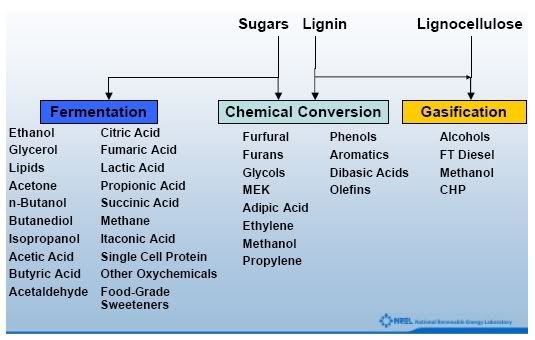
 A joint-venture ethanol project between Jamaica's state-owned oil refinery Petrojam and Brazil's
  Sweet potatoes (
 Brazil’s first commercial jatropha biodiesel project
  Biopact has been invited to chair a panel at the Gas Storage & Trading Summit that will take place during ICBI's
  According to the United Nations' World Meteorological Organization (WMO), weather and climate are
  In a major development, Abengoa's subsidiary
 Major aerospace manufacturers, governments, airlines, research organisations and service companies are currently researching the use of bio-based fuels for aviation, to mitigate the effects of increasing fuel prices and to reduce greenhouse gas emissions from air transport. Emissions from aviation currently account for about 3% of total EU greenhouse gas emissions, but they are increasing fast – by 87% since 1990 – as air travel becomes cheaper without its environmental costs being addressed.
 Scientists recently
  According to information obtained by the South China Morning Post, Dragon Power, a Beijing-based company that generates power from biomass,
  It has become a bit of a nuisance to read commonplaces about biofuels, such as the idea that they push up food prices or that they are not energy efficient. A more in-depth look at these important issues reveals a far more complex reality. But despite scientists' efforts to bring more nuance into the debate, some myths persist.
 The International Energy Agency's bioenergy program has released a handy tool that calculates the numbers of jobs created by a typical renewable energy project. The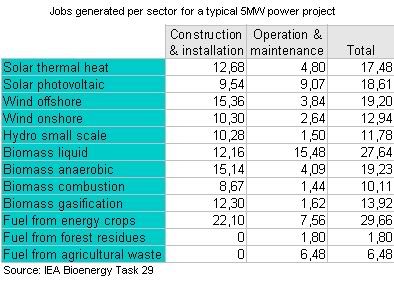

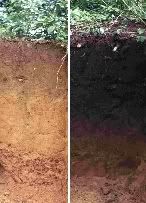 Growing food, fuel and fiber entails the use of fertilizer and irrigation systems and results in land-use changes. These ‘side effects’ of agriculture can lead to regime shifts or ‘tipping points’ which include desertification, salinisation, water degradation, and changes in climate due to altered water flows from land to atmosphere. But paradoxically, these very ecosystem services also hold the keys to ecosystem restoration.
 The increase in world agriculture prices caused by the global boom in biofuels could bring major benefits to the world’s rural poor who have been suffering under low prices for decades, according to the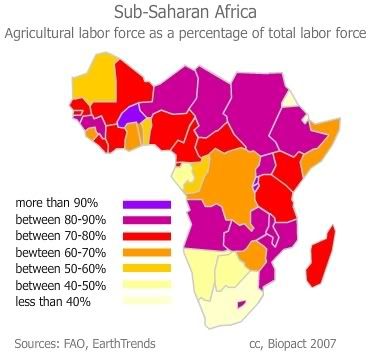

 Often a step ahead in green technological developments, a consortium of leading German research groups is set to
  The Department of Sustainable Development of the







Saturday, August 11, 2007
Germany considers opening natural gas network to biogas - major boost to sector
According to the ministry, by 2030, locally produced natural gas from biomass would supply up to 10 percent of Germany's total gas consumption and reduce, without extra costs, around 22 million tons of carbon dioxide. This comes down to around 2.5 per cent of Germany's projected greenhouse gas emissions for that year.
The ministry will instruct natural gas network operators "to give biogas producers priority access to the network as well as to feed in biogas", even though a target has not been disclosed. If needed, compensations for the effort will be paid at actual market prices.
Such a policy would differ from Germany's current Renewable Energy Law ('Erneuerbare-Energien-Gesetz' - EEG), which applies to electricity generated from renewables such as biomass, solar, hydro and wind power. Under this current system, producers of green electricity receive a fixed price which is set each year and which often is well above prevailing market prices. It is basically a subsidy. Last year, this subsidy ran up to a net sum of €3,2 billion. The costs are carried by the consumer. From an environmental perspective, the EEG can be called successful because it has brought the share of renewable electricity in Germany to 13 per cent - one of the highest shares in the industrialized world:
Currently, biogas is Germany's fastest growing renewables sector, and energy from biomass has taken the second largest overall share of the renewables mix (22%, against 4% for solar; wind remains by far the largest player). According to a recently released Eurobarometer for biogas, the country is Europe's largest producer, generating approximately 40% of all biogas produced in the Union in 2006 (more here).
Biogas is currently being fed into the natural gas mains in Germany only on a trial basis. But feasibility studies show that the technical barriers to couple purified biogas to natural gas networks can be overcome. A European Union funded project has made this clear (previous post).
The total energy potential for biogas has been the subject of several projections and scenarios, with the most optimal setting it at a total replacement of all European natural gas imports from Russia by 2020 (more here).
The Federal Ministry's proposal is welcomed by the German biogas sector which sees it as a major boost.
References:
Markenpost: Glos will Einspeisung von Biogas ins Erdgasnetz - August 10, 2007.
Biopact: Study: Biogas can replace all EU imports of Russian gas by 2020 - February 10, 2007
Biopact: Study: EU biogas production grew 13.6% in 2006, holds large potential - July 24, 2007
Article continues
posted by Biopact team at 3:34 PM 1 comments links to this post
