Malaysian palm oil company Kim Loong Resources Bhd has secured European energy trading group Vitol as buyer for all its carbon credits from its planned biogas plant in Kota Tinggi. The biogas facility generates methane from palm oil mill effluent, a waste product. The project is expected to generate over RM2 million (€423,000/US$579,000) of earnings annually. The methane capture and power generation project was registered and approved by the Clean Development Mechanism.
The Edge Daily - July 31, 2007.
GreenHunter Energy, Inc. announces that its wholly-owned subsidiary, GreenHunter BioFuels, Inc., located in Houston, Texas has successfully acquired Air Emission Permits from TCEQ (Texas Commission of Environmental Quality) under TCEQ's Permit by Rule (PBR) programs. These permits open the way for construction of a 105 million gallon per year (mgy) biodiesel facility including a separate but related methanol distillation facility.
PRNewswire - July 30, 2007.
Together with Chemical & Engineering News' Stephen K. Ritter, the journal Environmental Science & Technology sent Erika D. Engelhaupt to Brazil from where she wrote daily dispatches of news and observations about biofuels research. In particular she focuses on a bioenerrgy research partnership between the American Chemical Society, the Brazilian Chemical Society, and the Brazilian Agricultural Research Corporation (EMBRAPA). Check out her blog.
Dipatches from Brazil - July 28, 2007.
Consultation is under way on a £50 million (€74/US$101million) renewable energy plant planned for the South Wales Valleys. Anglo-Dutch company Express Power plans to build a wood-fuelled biomass plant on Rassau Industrial Estate in Blaenau Gwent. The plant will generate an annual 160,000 MWh (Mega Watt hours) of green electricity for Wales from forestry, recycled wood and wood derivatives.
ICWales - July 27, 2007.
The price of New York crude leapt to 77.24 dollar a barrel on Thursday, marking the highest level since August 9, 2006, as keen global demand and tight supplies fuelled speculative buying, traders said. On Wednesday, the US government had revealed that inventories of American crude fell by 1.1 million barrels last week.
France24 - July 26, 2007.
Arriva, one of Europe's largest transport groups is trialling B20 biodiesel for the first time on 75 of its buses. The company is aiming to reduce total carbon emissions by around 14 per cent by using biodiesel as a 20 per cent blend (predominantly be a mixture of sustainable soya products, along with used cooking oil and tallow). The 75 buses in the innovative trial will carry around 130,000 passengers every week. Minimal engineering changes will be required to the fleet as part of the scheme.
Arriva - July 26, 2007.
Marathon Oil Corporation announces that it has completed two more projects adding biodiesel blended fuel at its Robinson and Champaign terminals in Illinois. The terminals now feature in-line ratio blending in order to provide soy-based B-2 (two percent biodiesel) and B-11 (eleven percent biodiesel).
Marathon Oil - July 25, 2007.
Norway-based renewable energy firm Global Green One has agreed to set up a € 101.6 million bioethanol plant in Békéscsaba (southeast Hungary), with more facilities planned for Kalocsa, Szombathely and Kõszeg, the latter of which was already a target for a €25 million plant in May this year. The Békéscsaba plant would process 200,000 tonnes of maize per year, employing around 100 people. The logistics part of the facility would also create 100 jobs. The company expects the factory to generate €65 million in revenues each year.
Portfolio - July 25, 2007.
A Canadian firm, Buchanan Renewable Energies, is to begin an investment into Liberia's biomass industry that will grow to US$20 million in October and offer 300 jobs by end of the year. The company will start shipping 90 major pieces of equipment to Liberia by the end of August.
Daily Observer (Monrovia) - July 24, 2007.
KNM Process Systems Sdn Bhd, has secured a RM122 million (€26/$36m) order to build a biodiesel plant in Pahang, Malaysia, for Mission Biofuels Sdn Bhd, a subsidiary of Australian biofuels company Mission Biofuels Ltd. The plant will have a biodiesel output of 750 tonnes per day and glycerine output of 82 tonnes per day.
Malaysia Business Times - July 24, 2007.
AlgoDyne Ethanol Energy Inc. confirms that its retail partner, Canadian Green Fuels, has entered into an agreement with Cansource BioFuels to open a new biodiesel production facility in Mayerthorpe Alberta. The deal will see the construction and development of a community based, integrated crushing and biodiesel facility to process 10 million litres of ASTM certified canola based biodiesel which will be scaled up to produce 40million litres by 2010.
BusinessWire - July 23, 2007.
The Center for Management Technology announces the second Biomass-to-Liquids Technology conference will take place in Vienna this year, from 12 to 13 September. The current state of BTL-technologies will be presented and discussed. Biomass-to-Liquids conversion pathways are seen by many as promising avenues into the world of second generation biofuels that relies on the use of a broad variety of possible biomass feedstocks.
CMT - July 23, 2007.
Gulf Ethanol Corporation, a Houston-based energy company, announced today that it has initiated negotiations with representatives of government and industry in Uruguay. Discussions, coordinated by the U.S. Department of Commerce, centered on the synergy between Gulf Ethanol's interest in exploiting the potential of sorghum as a non-food fuel stock for ethanol production and the ideal conditions for growing the crop in Uruguay. The company criticizes the use of food crops like corn for ethanol in the U.S. and is seeking alternatives.
Yahoo Press Release - July 20, 2007.
Dutch company Capella Capital N.V. announces its investment in BiogasPark N.V. and acquires a 20 % stake upon the foundation of the company. The remaining shares are held by the management and strategic investors. BiogasPark N.V. will invest in the field of renewable energy and primarily focuses on financing, purchasing and the maintenance of biogas plant facilities.
Ad Hoc News - July 20, 2007.
Bioenergy company Mascoma Corp. is to build the world's first commercial scale cellulosic ethanol plant in Michigan where it will collaborate with Michigan State University. The $100 million plant will rely on the biochemical, enzymatic process that breaks down biomass to convert it to sugars. One of the factors that attracted Mascoma to Michigan was the recent $50 million federal grant MSU received to study biofuels in June. MSU will help in areas such as pretreatment technology for cellulosic ethanol production and energy crops that can be utilized by the plant.
The State News - July 20, 2007.
PetroChina, one of China's biggest oil companies, aims to invest RMB 300 million (€28.7/US$39.6m) in biofuel production development plans. A special fund is also going to be jointly set up by PetroChina and the Ministry of Forestry to reduce carbon emissions. Two thirds of the total investment will be channeled into forestry and biofuel projects in the provinces of Sichuan, Yunnan and Hebei, the remainder goes to creating a China Green Carbon Foundation, jointly managed by PetroChina and the State Forestry Administration.
China Knowledge - July 19, 2007.
Netherlands-based oil, gas, power and chemical industries service group Bateman Litwin N.V. announces it has signed an agreement to acquire Delta-T Corporation, a leading US-based bioethanol technology provider, with a fast growing engineering, procurement and construction division for a total consideration of US$45 million in cash and 11.8 million new ordinary shares in Bateman Litwin.
Bateman Litwin - July 18, 2007.
TexCom, Inc. announced today that it has signed a letter of intent to acquire Biodiesel International Corp. (BIC), and is developing a plan to build an integrated oilseed crushing and biodiesel production facility in Paraguay. The facility, as it is currently contemplated, would process 2,000 metric tons of oil seeds per day, yielding approximately 136,000 metric tons (approximately 39 Million Gallons) of biodiesel and 560,000 metric tons of soy meal pellets per year. Initial feedstock will consist mainly of soybeans that are grown in the immediate area of the proposed production plant in the Provinces of Itapua and Alto Parana.
MarketWire - July 18, 2007.
Spanish power company Elecnor announced that it will build Spain's biggest biodiesel production plant for €70 million (US$96.48 million). The plant, in the port of Gijon in northern Spain, will be ready in 22 months and will produce up to 500,000 tonnes of biodiesel a year from vegetable oil. The plant will be one of the world's biggest. Spain has decided to impose mandatory blending of biofuels with conventional fossil fuels as part of European Union efforts to curb greenhouse gas emissions.
Elecnor [*Spanish] - July 18, 2007.
The University of North Dakota Energy & Environmental Research Center (EERC) conducted a feasibility study to determine the most economical solutions to provide biomass energy to the isolated Chugachmiut Tribal Community in the village of Port Graham, Alaska, located on the Kenai Peninsula about 180 miles southwest of Anchorage. The village is only accessible by air or water, making traditional fossil fuel sources expensive to deliver and alternative forms of energy difficult to implement. The case study based on decentralised bioenergy offers interesting parallels to what would be needed to provide energy to the developing world's huge population that lives in similarly isolated conditions.
EERC - July 18, 2007.
According to a basic market report by Global Industries Inc., world biodiesel sales are expected to exceed 4.7 billion gallons (17.8 billion liters) by 2010. Though Europe, with a share estimated at 84.16% in 2006, constitutes the largest market, and will continue to do so for the coming years, major growth is expected to emanate from the United States. The automobile applications market for biodiesel, with an estimated share of 55.73% in 2006 constitutes the largest as well as the fastest growing end use application. Other applications independently analyzed include the Mining Applications market and the Marine Applications market.
PRWeb - July 18, 2007.
Is it economically viable and sustainable to produce hydrogen outside the EU from clean and renewable sources (biomass, wind, solar, hydro, geothermal), and then import it over very long distances to consumers in the Union? The answer is yes, according to ENCOURAGED, an EU-funded project, which released its summary report.
Funded under the Sixth Framework Programme (FP6), the ENCOURAGED project ('Energy Corridors Optimisation for the European Markets of Gas, Electricity and Hydrogen') analyses the technical, commercial and geopolitical complexities of long-distance trade and imports of natural gas, electricity and hydrogen. The project assessed the optimisation of future 'energy corridors' between the EU and neighbouring countries.
Extending the benefits of the Internal Market is part of actions of the EU to integrate the energy markets of surrounding countries. These current and future neighbouring countries will play a vital role in the development of the EU, as they are the main suppliers and transit countries for oil and natural gas. That role will grow significantly will be extended in the next decades with electricity trade and later possibly with hydrogen supply from neighbouring countries. The goals of ENCOURAGED were:
To assess the economic optimal energy interconnections and network infrastructure for electricity, gas and hydrogen of EU with and through neighbouring regions (North Africa, Middle East and Turkey, Central and Eastern Europe, Russia and Iceland) connecting EU with key producers in next decades.
To identify, quantify and evaluate the barriers and potential benefits of a large European “energy connected area”.
Propose necessary policy measures to implement the recommended energy corridors with a focus on investment and the geopolitical framework.
To recommend the necessary measures to be adopted to ensure, realize and implement these energy corridors and realise a high-level of network security and organise workshops and a final stakeholders conference to assure consensus among scientists and other stakeholders to validate the results.
Hydrogen trade feasible Concerns over energy supply security, climate change, local air pollution, and increasing price of energy services have a growing impact on policy decisions throughout the world. Increasingly, hydrogen is seen as offering a range of benefits with respect of being a clean energy carrier, if produced by clean, safe and renewable primary energy sources, such as biomass, wind, solar, geothermal or hydro. But since EU domestic energy resources are limited the question can be raised whether it is an economic efficient as well as sustainable option to produce hydrogen outside the EU and import it over very long distances to consumers inside the EU.
To answer that question first potential hydrogen demand in the EU in the very long term was projected. Next the potential cheapest hydrogen production centres were identified including the costs of producing the hydrogen there. These 12 centers outside Europe were Morocco, Algeria, Iceland, Norway, Romania, Bulgaria, Turkey and the Ukraine, where the clean gas can be made from renewables (map, click to enlarge). As a next step the total costs of selected hydrogen pathways are compared (graph, click to enlarge).
The project's study found that together the production centres could meet Europe's total projected hydrogen needs of the lowest hydrogen penetration scenario (400 terawatt-hour by 2040) and half of the highest scenario (over 1,000 Twh). North Africa has the largest technical potential (wind and solar) but production costs would be very high, followed by Turkey, Bulgaria and Romania (biomass) with a big potential and low costs, but where biomass may find more attractive, competing uses (combustion, methanation, liquid fuels). Norway, drawing on hydropower, has the third largest technical potential: energy :: sustainability :: renewables :: hydrogen :: wind :: solar :: geothermal :: hydropower :: biomass :: climate change :: energy security :: EU :: In summary and on the basis of the analysis of the potentials and the economic feasibility of different hydrogen corridor options with sources in the neighbouring countries, including a cost comparison with domestic hydrogen production in the EU25 (as benchmark), the following conclusions can be drawn:
Hydrogen import supply routes are particularly attractive in the very long term, if based on renewable energy sources and can significantly contribute to the EU policy goals of securing energy supply and reducing greenhouse gas emissions if sustainability is the key objective.
Importing renewable hydrogen could start first with some selected corridors after the introduction of hydrogen as a transport fuel, expected from 2015 onwards. Sources for this first phase could be found in Norway and Iceland.
When a significant level of hydrogen demand (as a transport fuel) is reached. i. e. more than 10 % hydrogen vehicles in the total vehicle stock around 2030/2040, a wide supply portfolio is possible.
Even when renewable feedstock is used, the supply cost (without tax) of many pathways is within a range of double the current cost of gasoline and hence only economically viable under similar terms as presently applied to bio-fuels.
Due to the relevant influence of transport costs on the economics of hydrogen corridors, it is important to consider only large-scale production sources in order to exploit economies of scales to lower the relative high specific costs today.
Of all corridor options analysed, hydrogen from hydro or geothermal power from Iceland offers the cheapest hydrogen and the lowest barriers with respect to competing with alternative use of it. This is followed by hydrogen from hydropower in Norway and Romania. The following corridors are promising but have certain limitations, e.g. hydrogen from wind power and solar radiation in North Africa (high potential, but also relative high cost) and hydrogen based on biomass from Romania, Bulgaria and Turkey - comparatively cheap, but biomass meets various alternative and very competing applications.
It should be noted that many uncertainties are surrounding the main conclusions regarding economic, feasibility and assumptions underlying the recommendable corridors for the three types of energy carriers. Nevertheless the authors think that the suggested energy corridors with neighbouring countries are robust options to be further investigated in more detail.
To lower costs, the ENCOURAGED study recommends considering only large-scale solutions in order to exploit economies of scale. Of all the hydrogen corridors analysed, hydrogen or geothermal power from Iceland offers the cheapest hydrogen and the lowest barriers with respect to competing alternative use of it. This is followed by hydrogen from hydropower in Norway and Romania, and hydrogen from biomass in Turkey:
Hydrogen could therefore be imported first from these selected corridors and used as a transport fuel. Once the demand for hydrogen (more than 10% of vehicles running on hydrogen by 2030) increases, then a wider portfolio may be considered, says the study. It concludes by underlining the need for further research on these hydrogen corridors to weigh up the pros and cons of them.
DuPont and Cold Spring Harbor Laboratory today announced they have entered into a multi-year research collaboration for crop genetics research on yield enhancement and development of enabling technologies in corn, soybeans and other important agricultural crops.
Pioneer Hi-Bred, a DuPont business involved in agricultural plant genetics, and Cold Spring Harbor Laboratory (CSHL), an internationally recognized research institution focusing plant biology, have collaborated on individual projects over the past decade. This multi-project, multi-year effort will allow for a deeper sharing of information that aims to facilitate unique approaches to long-term agronomic challenges.
Increasing crop yields is critical to meet growing global demands for food, feed, fuel and fiber. The collaboration will develop technologies that accelerate the rate of yield increase, as well as traits that will bring value to farmers worldwide. - William S. Niebur , vice president – DuPont Crop Genetics Research and Development.
Several teams of researchers from both organizations will make use of extensive genomics data, trait information and germplasm resources from Pioneer in the discovery research collaboration. Pioneer also will have responsibility for bringing innovations and technologies resulting from the collaboration to the marketplace.
The collaboration is expected to accelerate the contributions of plant biology and bioinformatics research to improve global agriculture. The fusion of academic and industry research strengths may produce unique approaches to advance plant science: energy :: sustainability :: biomass :: bioenergy :: biofuels :: agronomy :: genomics :: plant biology :: GMO :: energy crops :: Founded in 1890, CSHL is a private, non-profit research and education institution with programs in cancer, neuroscience, plant genetics, genomics and bioinformatics. The transposable genetic elements, or “jumping genes,” discovered in the middle of the 20th Century at CSHL by Nobel prize winner Barbara McClintock, are the building blocks of plant genetics research today. CSHL is at the forefront of research to isolate plant genes and unravel the genomic sequences of plants such as Arabidopsis, maize and rice.
Pioneer Hi-Bred, a DuPont business, is the world's leading source of customized solutions for farmers, livestock producers and grain and oilseed processors. With headquarters in Des Moines, Iowa, Pioneer provides access to advanced plant genetics in nearly 70 countries.
Growth in supply of oil products from outside the refining system, that is biofuels and oil products supplied from Natural Gas Liquids (NGLs), will lead to a potential oversupply situation in 2010. This is expected to reduce gasoline prices and impact on refinery utilisation rates concludes oil & gas consultancy Wood Mackenzie in its latest downstream research reportGlobal Refining in 2010 – Out of Balance.
The central conclusion — that a glut of fuel supply from outside the conventional refining system could depress gasoline prices — differs considerably from the consensus amongst other energy experts, which holds that the supply impact from biofuels and other sources will be limited between now and the end of the decade. The report comes amid an industry-wide reevaluation of refinery expansion projects that were once considered likely to be online by 2010 (see the IEA's latest assessment, and OPEC's analysis).
Non-refinery supply is forecast to grow by just over 80 Mt between 2006 and 2010 due to increased NGLs production and from the drive to increase biofuels consumption. While rising refinery project costs (80-100 percent higher since 2002) have led to significant delays and cancellations of a number of key projects post 2010, this reduction in new refinery capacity alone is not enough to counter the oversupply issue. Large clean product surpluses emerging in the Middle East and Asia Pacific are projected to affect utilisation rates in the East of Suez region. - Aileen Jamieson, Downstream Research Manager for Wood Mackenzie
The report states that the impact of the ethanol mandate in the US, and its potential future development, has led refiners to raise doubts about adding refining capacity. As a result, the gasoline deficit in North America will continue to grow by 2010, contrary to an industry expectation that this deficit will be reduced in the short-term. This will provide an outlet for Europe’s gasoline surplus, which is expected to continue to grow.
In fact, Wood Mackenzie anticipates that almost 50 Mt of ethanol will be used globally by 2010, while just less than 20 Mt of biodiesel will be consumed. Brazil and the US are projected to account for 75 percent of global ethanol consumption, while the European Union accounts for almost two thirds of biodiesel use: energy :: sustainability :: ethanol :: biodiesel ::biofuels :: gasoline :: natural gas liquids :: oversupply :: refinery :: downstream :: The growth in NGLs production will also lead to a growing surplus of LPG at the same time as a large and growing deficit of naphtha, due to strong demand for petrochemicals. Hence the report also notes that feedstock flexibility will be key for petrochemicals manufacturers in the Middle East and Asia Pacific, where the greatest LPG/naphtha imbalances occur.
Meanwhile, overbuild of refinery upgrading units such as cokers and FCCs is leading to a global oversupply of gasoline and a growing shortage of fuel oil. Despite expected changes in refinery utilisation and yield patterns, as refineries are re-optimised to meet changing demand patterns, gasoline remains with an incremental surplus of 16 Mt, while fuel oil is incrementally 16 Mt short, globally, leading to downward pressure on the gasoline price and an upward pressure on fuel oil price. References: Wood Mackenzie: Wood Mackenzie Sees Global Oil Products Oversupply by 2010 Leading to Gasoline Price Reduction - July 31, 2007.
By-products from biofuels could help beef up livestock feed in the future, according to a study completed by environmental research group ADAS UK in collaboration with the School of Biosciences at the University of Nottingham's Division of Agricultural and Environmental Sciences. Rising animal feed costs – partly driven by the demand for biofuels – have caused alarm in the meat production industry recently. But over the long term, biofuel by-products may slow down this upward trend. The study, funded by the Home-Grown Cereals Authority (HGCA), British Pig Executive (BPEX) and English Beef and Lamb Executive (EBLEX), looks at the possibility that co-products from both biodiesel and bioethanol could be used to feed livestock. Some of the findings echo earlier assessments made by the EU (previous post).
It is estimated that, by 2010, there will be an additional 150,000 tonnes of rapeseed meal (RSM) and 10,000 tonnes of glycerol from UK crushed oilseed rape. Predicting wheat distillers’ dried grains with solubles (DDGS) is more difficult but, based on current planned production, some 940,000 tonnes may be available for use as animal feed. - Dr Bruce Cottrill, report author
These large streams of co-products result in a considerable potential for inclusion in livestock feed formulations for cattle, sheep, pigs and poultry. Table 1 outlines the projected inclusion rates for rapeseed meal and for DDGS in different compound feeds.
In the short term, co-products from biofuel production from oilseed rape (and other oilseeds) and sugar beet are likely to have a similar nutritional value to existing co-products. DDGS resulting from bioethanol production could be very different nutritionally to that of DDGS produced from the current potable alcohol production, but this will depend on methods of production used.
In the medium term, pressure to reduce green house gas emissions is likely to result in lower protein content feedstocks produced through lower fertiliser use and the development and use of new varieties. This will result in a lower protein content in the co-products. The effects of this on total or digestible amino acid content, or on rumen degradability, are unknown, but will need to be assessed in order to optimise the use of the co-products in livestock diets.
Glycerol (glyerin) a co-product of biodiesel is a high energy feed, which can be fed to both ruminants and monogastric animals, although there is relatively little experience of its use as an animal feed. Further research in the UK is recommended to assess maximum inclusion rates in livestock diets.
Based on current estimates of production, it seems likely that the livestock industry could absorb all of the additional RSM and glycerol produced. Their use would displace other feed materials currently imported into the UK.
The report further notes that variability in the composition of co-products between different biofuel producers does occur, and can be a major issue for feed compounders. However, variability is likely to become less as technology develops and biofuel producers adopt the most efficient methods of production: energy :: sustainability :: ethanol :: biodiesel :: biomass :: bioenergy :: biofuels :: glycerin :: distillers dried grains :: oilseed meal :: co-products :: livestock :: Increasing global demand for biofuels will affect feed prices primarily as a result of the increase in demand for the raw feedstocks (wheat, maize, soyabean and oilseed rape). In the UK it is anticipated that cereal prices will rise, and as a result overall feed prices will increase. If significant supplies of RSM and DDGS become available in the UK, protein sources used in compound feed formulations may change, and this will be reflected in changes in the total protein and amino acid profiles of rations. As a result, there could be increases in the amounts of N and P excreted by livestock. Concentrate feeds used in the UK are subject to world feed prices, and as a result, increasing supplies of RSM, DDGS or glycerol would be most likely to replace imported feeds.
The amount will fluctuate as the biofuel market matures but this is undoubtedly an opportunity for the British pig industry and manufacturers will be including significant amounts of these in diets. - Mick Sloyan, BPEX chief executive
Methods of energy generation from biomass are likely to change rapidly over the next few years. Lignocellulose sources are likely to become the major feedstocks for bioethanol plants, while there will be increasing attention on the development and use of alternative oilseeds for biodiesel production. These developments will have an impact both on crop and livestock producers in the UK, and they will need to react rapidly to changes in the supply of feed materials.
EBLEX chief executive Richard Ali said: "What shines through in this report are the linkages between energy and agricultural policy and I have no doubt that the livestock sector will become increasingly active in analysing the effects of proposed changes in those regimes."
Photo: distillers’ dried grains from corn in a U.S. ethanol plant. Courtesy: USDA ARS.
South Africa is threading carefully towards a biofueled future. More thorough policy work and consultation are underway to ensure that the sector benefits smallholders first and that regulation is based on a realistic assessment of South Africa's (relatively small) technical potential. The country's Science and Technology Minister, Mosibudi Mangena, said legislation will not be finalized by the end of this year.
The idea that biofuels may serve as an engine of rural development combinded with the prospect of 'peak oil' have made the case for biofuels all the stronger though. South Africa now has one of the most ambitious proposed targets, wanting 75 percent of its renewable energy needs by 2013 covered by biofuels as it seeks to create new markets for its ailing agricultural sector.
Meanwhile, the debate over whether to promote sugarcane over maize as ethanol feedstock continues. And importantly, it has become apparent that South Africa is unlikely to introduce subsidies to support biofuel producers. The country's farming sector underwent a massive cut in state subsidies in the post-apartheid era which is why subsidizing biofuels producers would spark an outcry from farmers.
Mangena was speaking at the 26th annual International Society of Sugarcane Technologists' congress in Durban. The minister said that the contribution of carbon emissions from the combustion of fossil fuels and the fact that global demand for crude oil was consistently outstripping its supply meant that alternative supplies for the world's fuel needs would have to be found.
Small farmers first The government has suggested that the biofuels industry would be considered as a market for subsistence farmers who would produce feedstock to produce bioethanol. Mangena acknowledged, however, that South Africa is a water-stressed country and the use of valuable land for fuel feedstock production would have to be carefully weighed against food security.
The biofuels industry in South Africa currently remains small, although the country exports about 45% of its sugar crop, which is a potential source of ethol. The South African sugar industry produces roughly 2.5 million tons of sugar a year: energy :: sustainability :: ethanol :: biodiesel :: biomass :: bioenergy :: cellulosic biofuels :: subsidies :: rural development :: South Africa :: Until now, the government's focus in agricultural development was largely on transformation through agrarian reform. In this the sugar industry had contributed widely by helping to establishing communities of small growers. However, Mangena was not yet able to comment on the degree of support the government was considering providing to emerging and subsistence farmers for the production of biofuel feedstock. He said various stakeholders from the departments of minerals and energy, agriculture and land affairs, and from environment and tourism were still making inputs. The parliamentary subcommittees on biofuels were expected to report by the end of the year.
Peak oil Earlier in the congress, which is being held under the auspices of the South African Sugar Association, biologist and biofuel entrepreneur Paul Zorner said that recent year-on-year demand for crude oil had been growing at 2,2% against a historical demand of 1,6%. The demand for transport fuel was expected to be 50% greater by 2030 that what it was today:
Zorner quoted Jeffrey Currie of U.S. financial services consultancy Goldman Sachs as saying that a price of $95 a barrel of crude was likely this year, unless the Opec oil cartel unexpectedly lifted production. 'Oil production is past its peak, though', said Zorner.
Apart from fuel prices, the economic viability of a biofuels industry would depend on the cost and availability of raw feedstock, government regulation and the efficiency of conversion technology. Zorner said that at an oil price of $40 a barrel (a price not seen for years), biofuel market penetration of 10% could be expected. At $50 a barrel the penetration of 30% could be expected. "However, a price of more than $60 a barrel for the next three decades is likely."
Zorner said the U.S., which was by far the world's biggest fuel consumer, had passed legislation last month that would see the use of ethanol for transport fuel increase sevenfold. That would increase world consumption of ethanol three times.
Maize versus sugarcane Mangena said officials had started to question the wisdom of using maize as a major source for renewable energy. Land officials offered biofuels as part of a rescue plan for maize farmers two years ago when a surplus maize harvest pushed prices to four-year lows. But since then, prices have picked up and for the second consecutive season, South Africa faces a poor maize harvest, raising fears of food security, Mangena said.
Zorner added that biofuel produced from maize provided no carbon dioxide mitigation relative to that of petrol. However, cellulosic and sugar-cane based ethanol reduced carbon dioxide emissions 80% relative to petrol.
The debate about whether SA should favour maize-ethanol production over sugar-ethanol production was not settled, Mangena said. Maize ethanol was considered as an option because of its accessibility to small and subsistence farmers.
Ethanol has been presented as one of several alternative fuels that would reduce the world's carbon emissions, which are largely deemed responsible for global warming and an expected climate change.
Zorner proposed the production of sugar cane for its biomass qualities, rather than for sugar, to produce ethanol from cellulose. This would require a high level of technology, using enzymes to break down cellulose.
He said that in biomass production, sugar cane was the most productive crop on the planet which, through indirect fermentation using enzymes produced by termites, for example, could be converted into energy. Zorner said the technology to transform biomass into fuel existed and that it was about six to eight years away from commercial viability.
Although none of the economic models Zorner developed for this production process depended on subsidies, it would require "heavy global investment" to drive innovation. The biggest hurdle was financing the initial large refineries, he said.
Subsidies unlikely South Africa's biofuels programme may become a lifeline for the struggling farming sector, but Mangena said that it is unlikely that subsidies will be introduced.
The Southern African Biofuels Association says it needs between 2 billion rand and five billion rand a year from the government to get a capital intensive industry off the ground. Mangena said lending support to the renewable energy industry might spark an outcry from farmers, whose fortunes have waned after a massive cut in state subsidies in post-apartheid South Africa.
My suspicion is government will not give support but will give guidance as to what is desirable and what is not desirable. [...] In the South African environment there are all sorts of factors to be considered. For example... the farming community has been asking for subsidies for quite a while now and you know there are no subsidies. - Mosibudi Mangena, Science and Technology Minister
The minister's statements square with broader free-market economic policies that have taken hold under President Thabo Mbeki, who has also made a tight fiscus the hallmark of his rule since 1999.
International research effort underway to sequence cassava genome, which may result in increased starch yields - USDA Agricultural Research Service - Aug. 30, 2006
Cassava has one of the highest rates of CO2 fixation and sucrose synthesis for any C3 plant. With this in mind, researchers from Ohio State University develop transgenic cassava with starch yields up 2.6 times higher than normal plants by increasing the sink strength for carbohydrate in the crop. This means cassava makes for a 'super crop' when it comes to both CO2 fixation and carbohydrate production, i.e. sugars, the feedstock for ethanol - Plant Biotechnology Journal - Volume 4/Issue 4 - July 2006
Vietnam's Institute of Tropical Biology to invest in Jatropha research - Le courrier du Vietnam - Sept. 6, 2006
Genetic study proves humans have pushed orangutans to the brink of extinction; genetic decline coincides with establishment of oil palm plantations in Malaysia/Indonesia since the 1950/60s- Public Library of Science / Biology, Volume 4/Issue 2 - February, 2006
Synthetic Genomics and the Asiatic Centre for Genome Technology Sdn Bhd (ACGT) have created a multi-year research and development joint venture to sequence and analyze the oil palm genome. In-depth genomic analyses will be followed by subsequent studies that will analyze the oil palm’s root and leaf microbial communities, to identify biomarkers and metabolic pathways that affect the plant's growth and viability. Biopact - July, 2007
Researchers at the International Institute for the Semi-Arid Tropics have developed a sweet sorghum for the production of ethanol. The new variety has a very high sugar content in its root. Average yields in trial fields in the Philippines were between 95 to 125 tons, considerably higher than those of sugarcane - ICRISAT - Feb. 28, 2007
Sokoine University of Agriculture, Tanzania, develops sorghum and millet processing technologies suitable for local conditions in effort to empower small farmers - IPP Media - Sept. 6, 2006
South Africa blocks GM Sorghum project for fears over contamination of local wild sorghums - Kruger Park - Aug. 26, 2006
Brazilian authorities have given their fiat for field trials with genetically modified sugar cane plants. The Centro de Tecnologia Canavieira (Cane Technology Center - CTC) will test three genetically modified varieties that are expected to yield 15% more sugar - GMO Compass
The International Eucalyptus Genome Consortium's sequencing effort has been taken up as a project under the U.S. Dept. of Energy's Joint Genome Project for the year 2008. - Biopact June 12, 2007
Brazilian state of Acre intends to make cattle ranchers reforest land which they have cleared for grazing. The sustainable forestry policy is based on replanting economic tree crops such as mahogany, acai, Brazil nut and palms - BBCNews Sept. 27, 2006
Illegal deforestation of acacia for charcoal is becoming a serious problem in Kenya's Naivasha area. Nobel Peace Prize laureate Wangari Maathai's Green Belt Movement re-afforests with acacia but needs more support to win fight against illegal loggers - Kenya Times Sept. 5, 2006
Australian scientists are conducting a 'time-machine' experiment to see how eucalyptus trees cope with increased levels of CO2 and global warming. - University of Western Sydney Aug. 28, 2006
Bamboo planting can slow deforestation, scientists from the International Center for Research in Agroforestry in Nairobi, Kenya, say. Bamboo rapidly becoming economically beneficial crop with large potential for energy, bioremediation, and afforestation - Chosun (S.Korea) Aug. 30, 2006
"The beauty of miscanthus is that you only have to sow it once...Because of the way it grows, there is no need for fertilisers or chemicals", an English entrepreneur talks about his experience with Miscanthus as an energy crop - Grantham Today Aug. 8, 2006

 Malaysian palm oil company Kim Loong Resources Bhd has secured European energy trading group Vitol as buyer for all its carbon credits from its planned biogas plant in Kota Tinggi. The biogas facility generates methane from palm oil mill effluent, a waste product. The project is expected to generate over RM2 million (€423,000/US$579,000) of earnings annually. The methane capture and power generation project was registered and approved by the Clean Development Mechanism.

 energy :: sustainability :: biomass :: bioenergy :: biofuels :: agronomy :: genomics :: plant biology :: GMO :: energy crops ::
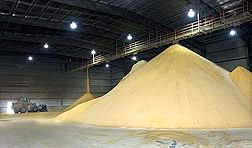 By-products from biofuels could help beef up livestock feed in the future, according to a study completed by environmental research group

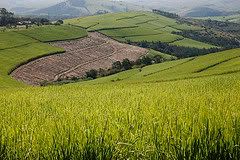 South Africa is threading carefully towards a biofueled future. More thorough policy work and consultation are underway to ensure that the sector benefits smallholders first and that regulation is based on a realistic assessment of South Africa's (relatively small) technical potential. The country's Science and Technology Minister, Mosibudi Mangena, said legislation will not be finalized by the end of this year.







Tuesday, July 31, 2007
EU project: long-distance hydrogen transport and trade feasible
Funded under the Sixth Framework Programme (FP6), the ENCOURAGED project ('Energy Corridors Optimisation for the European Markets of Gas, Electricity and Hydrogen') analyses the technical, commercial and geopolitical complexities of long-distance trade and imports of natural gas, electricity and hydrogen. The project assessed the optimisation of future 'energy corridors' between the EU and neighbouring countries.
Extending the benefits of the Internal Market is part of actions of the EU to integrate the energy markets of surrounding countries. These current and future neighbouring countries will play a vital role in the development of the EU, as they are the main suppliers and transit countries for oil and natural gas. That role will grow significantly will be extended in the next decades with electricity trade and later possibly with hydrogen supply from neighbouring countries. The goals of ENCOURAGED were:
- To assess the economic optimal energy interconnections and network infrastructure for electricity, gas and hydrogen of EU with and through neighbouring regions (North Africa, Middle East and Turkey, Central and Eastern Europe, Russia and Iceland) connecting EU with key producers in next decades.
- To identify, quantify and evaluate the barriers and potential benefits of a large European “energy connected area”.
- Propose necessary policy measures to implement the recommended energy corridors with a focus on investment and the geopolitical framework.
- To recommend the necessary measures to be adopted to ensure, realize and implement these energy corridors and realise a high-level of network security and organise workshops and a final stakeholders conference to assure consensus among scientists and other stakeholders to validate the results.
The ENCOURAGED project now published its summary report titled Energy corridors: European Union and Neighbouring countries [*.pdf]. We focus on the findings concerning long-distance hydrogen trade.Hydrogen trade feasible
The project's study found that together the production centres could meet Europe's total projected hydrogen needs of the lowest hydrogen penetration scenario (400 terawatt-hour by 2040) and half of the highest scenario (over 1,000 Twh). North Africa has the largest technical potential (wind and solar) but production costs would be very high, followed by Turkey, Bulgaria and Romania (biomass) with a big potential and low costs, but where biomass may find more attractive, competing uses (combustion, methanation, liquid fuels). Norway, drawing on hydropower, has the third largest technical potential:
In summary and on the basis of the analysis of the potentials and the economic feasibility of different hydrogen corridor options with sources in the neighbouring countries, including a cost comparison with domestic hydrogen production in the EU25 (as benchmark), the following conclusions can be drawn:
- Hydrogen import supply routes are particularly attractive in the very long term, if based on renewable energy sources and can significantly contribute to the EU policy goals of securing energy supply and reducing greenhouse gas emissions if sustainability is the key objective.
- Importing renewable hydrogen could start first with some selected corridors after the introduction of hydrogen as a transport fuel, expected from 2015 onwards. Sources for this first phase could be found in Norway and Iceland.
- When a significant level of hydrogen demand (as a transport fuel) is reached. i. e. more than 10 % hydrogen vehicles in the total vehicle stock around 2030/2040, a wide supply portfolio is possible.
- Even when renewable feedstock is used, the supply cost (without tax) of many pathways is within a range of double the current cost of gasoline and hence only economically viable under similar terms as presently applied to bio-fuels.
- Due to the relevant influence of transport costs on the economics of hydrogen corridors, it is important to consider only large-scale production sources in order to exploit economies of scales to lower the relative high specific costs today.
- Of all corridor options analysed, hydrogen from hydro or geothermal power from Iceland offers the cheapest hydrogen and the lowest barriers with respect to competing with alternative use of it. This is followed by hydrogen from hydropower in Norway and Romania. The following corridors are promising but have certain limitations, e.g. hydrogen from wind power and solar radiation in North Africa (high potential, but also relative high cost) and hydrogen based on biomass from Romania, Bulgaria and Turkey - comparatively cheap, but biomass meets various alternative and very competing applications.
It should be noted that many uncertainties are surrounding the main conclusions regarding economic, feasibility and assumptions underlying the recommendable corridors for the three types of energy carriers. Nevertheless the authors think that the suggested energy corridors with neighbouring countries are robust options to be further investigated in more detail.To lower costs, the ENCOURAGED study recommends considering only large-scale solutions in order to exploit economies of scale. Of all the hydrogen corridors analysed, hydrogen or geothermal power from Iceland offers the cheapest hydrogen and the lowest barriers with respect to competing alternative use of it. This is followed by hydrogen from hydropower in Norway and Romania, and hydrogen from biomass in Turkey:
Hydrogen could therefore be imported first from these selected corridors and used as a transport fuel. Once the demand for hydrogen (more than 10% of vehicles running on hydrogen by 2030) increases, then a wider portfolio may be considered, says the study. It concludes by underlining the need for further research on these hydrogen corridors to weigh up the pros and cons of them.
References:
ENCOURAGED project: Energy Corridors Optimisation for the European Markets of Gas, Electricity and Hydrogen, homepage.
European Commission, Directorate-General for Research, Directorate Energy: Energy corridors: European Union and Neighbouring countries [*.pdf], Sustainable Energy Systems - July 2007.
Article continues
posted by Biopact team at 8:20 PM 0 comments links to this post