Gulf Ethanol Corporation, a Houston-based energy company, announced today that it has initiated negotiations with representatives of government and industry in Uruguay. Discussions, coordinated by the U.S. Department of Commerce, centered on the synergy between Gulf Ethanol's interest in exploiting the potential of sorghum as a non-food fuel stock for ethanol production and the ideal conditions for growing the crop in Uruguay. The company criticizes the use of food crops like corn for ethanol in the U.S. and is seeking alternatives.
Yahoo Press Release - July 20, 2007.
Dutch company Capella Capital N.V. announces its investment in BiogasPark N.V. and acquires a 20 % stake upon the foundation of the company. The remaining shares are held by the management and strategic investors. BiogasPark N.V. will invest in the field of renewable energy and primarily focuses on financing, purchasing and the maintenance of biogas plant facilities.
Ad Hoc News - July 20, 2007.
Bioenergy company Mascoma Corp. is to build the world's first commercial scale cellulosic ethanol plant in Michigan where it will collaborate with Michigan State University. The $100 million plant will rely on the biochemical, enzymatic process that breaks down biomass to convert it to sugars. One of the factors that attracted Mascoma to Michigan was the recent $50 million federal grant MSU received to study biofuels in June. MSU will help in areas such as pretreatment technology for cellulosic ethanol production and energy crops that can be utilized by the plant.
The State News - July 20, 2007.
PetroChina, one of China's biggest oil companies, aims to invest RMB 300 million (€28.7/US$39.6m) in biofuel production development plans. A special fund is also going to be jointly set up by PetroChina and the Ministry of Forestry to reduce carbon emissions. Two thirds of the total investment will be channeled into forestry and biofuel projects in the provinces of Sichuan, Yunnan and Hebei, the remainder goes to creating a China Green Carbon Foundation, jointly managed by PetroChina and the State Forestry Administration.
China Knowledge - July 19, 2007.
Netherlands-based oil, gas, power and chemical industries service group Bateman Litwin N.V. announces it has signed an agreement to acquire Delta-T Corporation, a leading US-based bioethanol technology provider, with a fast growing engineering, procurement and construction division for a total consideration of US$45 million in cash and 11.8 million new ordinary shares in Bateman Litwin.
Bateman Litwin - July 18, 2007.
TexCom, Inc. announced today that it has signed a letter of intent to acquire Biodiesel International Corp. (BIC), and is developing a plan to build an integrated oilseed crushing and biodiesel production facility in Paraguay. The facility, as it is currently contemplated, would process 2,000 metric tons of oil seeds per day, yielding approximately 136,000 metric tons (approximately 39 Million Gallons) of biodiesel and 560,000 metric tons of soy meal pellets per year. Initial feedstock will consist mainly of soybeans that are grown in the immediate area of the proposed production plant in the Provinces of Itapua and Alto Parana.
MarketWire - July 18, 2007.
Spanish power company Elecnor announced that it will build Spain's biggest biodiesel production plant for €70 million (US$96.48 million). The plant, in the port of Gijon in northern Spain, will be ready in 22 months and will produce up to 500,000 tonnes of biodiesel a year from vegetable oil. The plant will be one of the world's biggest. Spain has decided to impose mandatory blending of biofuels with conventional fossil fuels as part of European Union efforts to curb greenhouse gas emissions.
Elecnor [*Spanish] - July 18, 2007.
The University of North Dakota Energy & Environmental Research Center (EERC) conducted a feasibility study to determine the most economical solutions to provide biomass energy to the isolated Chugachmiut Tribal Community in the village of Port Graham, Alaska, located on the Kenai Peninsula about 180 miles southwest of Anchorage. The village is only accessible by air or water, making traditional fossil fuel sources expensive to deliver and alternative forms of energy difficult to implement. The case study based on decentralised bioenergy offers interesting parallels to what would be needed to provide energy to the developing world's huge population that lives in similarly isolated conditions.
EERC - July 18, 2007.
According to a basic market report by Global Industries Inc., world biodiesel sales are expected to exceed 4.7 billion gallons (17.8 billion liters) by 2010. Though Europe, with a share estimated at 84.16% in 2006, constitutes the largest market, and will continue to do so for the coming years, major growth is expected to emanate from the United States. The automobile applications market for biodiesel, with an estimated share of 55.73% in 2006 constitutes the largest as well as the fastest growing end use application. Other applications independently analyzed include the Mining Applications market and the Marine Applications market.
PRWeb - July 18, 2007.
O2Diesel Corporation announced that it has received the regulatory approvals necessary to start delivering its proprietary diesel ethanol blended fuel, O2Diesel, in the French market. The approvals pave the way for O2Diesel to move forward into the next stage of its European market development strategy by commencing deliveries to a number of targeted fleets in France.
MarketWire - July 17, 2007.
The BBC World Service is hosting a series of programmes on the global obesity pandemic. Over the coming two weeks a range of documentaries and discussions will be held on the obesity time-bomb that is growing all over the West, but also in the developing world. In North America, a quarter of people are now morbidly obese, 60% is overweight, and one in three children will become obese. The epidemic is spreading rapidly to China and India.
BBC World Service - July 16, 2007.
A new report from Oregon State University shows the biofuels industry is on track to be a $2.5 billion chunk of the state's economy within 20 years. The study identifies 80 potential biodiesel, ethanol and biomass facilities which could produce a combined 400 million gallons (1.5 billion liters) per year of ethanol and another 315 million gallons (1.2 billion liters) of biodiesel. On an oil equivalent basis, this comes down to around 38,000 barrels per day.
Oregon State University - July 16, 2007.
Jatropha biodiesel manufacturer D1 Oils has appointed a leading plant scientist to its board of directors. Professor Christopher Leaver, Sibthorpian professor of plant science and head of the plant sciences department at Oxford University, has joined the Teesside company as a non-executive director. Professor Leaver, who was awarded a CBE in 2000, is a leading expert in the molecular and biochemical basis of plant growth and differentiation.
D1Oils Plc - July 16, 2007.
Panama and South Africa are set to cooperate on biofuels. A delegation consisting of vice-minister of Foreign Affairs Azis Pahad, of Finance, Jubulai Moreketi and of Finance, met with Panama's vice-chancellor Ricardo Durán to discuss joint biodiesel and ethanol production and distribution. Panama's goal is to become a hub for internationally traded bioenergy, making use of the strategic position of the Canal.
La Prensa Gráfica [*Spanish] - July 14, 2007.
Spanish investors are studying the opportunity to invest in agro-industrial projects in Morocco aimed at producing biofuel from the Jatropha plant. Morocco’s Minister for Energy and Mines, Mohammed Boutaleb, said Moroccan authorities are willing to provide the necessary land available to them, provided that the land is not agricultural, is located in semi-arid regions, and that the investors agree to use water-saving agricultural techniques, such as drip-feed irrigation.
Magharebia - July 14, 2007.
Philippine Basic Petroleum Corp. plans to raise as much as 2.8 billion pesos (€44.4/US$61.2 million) through a follow-on offering and loans to finance a 200,000 liter per day bio-ethanol plant in the province of Zamboanga del Norte. The move into biofuels comes in anticipation of the implementation of RA 9367 or the Philippines biofuels law. RA 9367 mandates five percent bioethanol blending into gasoline by 2009, and 10 percent by 2011.
Manila Bulletin - July 14, 2007.
The Michigan Economic Development Corporation last week awarded a $3.4 million grant to redevelop the former Pfizer research facility in Holland into a bioeconomy research and commercialization center. Michigan State University will use the facility to develop technologies that derive alternative energy from agri-based renewable resources.
Michigan.org - July 13, 2007.
Fuel prices increased three times in Mozambique this year due to high import costs. For this reason, the country is looking into biofuels as an alternative. Mozambique's ministries of agriculture and energy presented a study showing that more than five million hectares of land can be used sustainably in the production of crops that would produce biodiesel fuels. The first phase of a biofuel implementation plan was also presented, identifying the provinces of Inhambane, Zambezia, Nampula and Cabo Delgado as the first to benefit.
News24 (Capetown) - July 12, 2007.
The Malaysian Oleochemical Manufacturers Group (MOMG) has urged the government for incentives and grants to companies to encourage the development of new uses and applications for glycerine, the most important byproduct of biodiesel. Global production of glycerine is currently about one million tonnes. For every 10 tonnes of oil processed into biodiesel, one tonne of glycerine emerges as a by-product.
Bernama - July 12, 2007.
BioDiesel International AG has acquired 70 per cent of the shares in Lignosol, a Salzburg based company that is making promising progress in Biomass-to-Liquids conversion techniques. The purchase price is in the single-digit million Euro range.
ACN - July 10, 2007.
Gay & Robinson Inc. and Pacific West Energy LLC announced today a partnership to develop an ethanol plant in Hawaii based on sugarcane feedstocks. The plant's capacity is around 12 million gallons (45 million liters) per year. The partnership called Gay & Robinson Ag-Energy LLC, will also ensure the continuation of the Gay & Robinson agricultural enterprise, one of the oldest in Hawaii. Approximately 230 jobs will be preserved, and a large area of West Kauai will be maintained in sustainable agriculture.
Business Wire - July 10, 2007.
Water for Asian Cities (WAC), part of UN-Habitat, is extending partial financial support for the construction of several biogas plants across the Kathmandu valley and develop them as models for municipal waste management. The first biogas plants will be built in Khokna, Godavari, Kalimati, Patan, Tribhuvan University premises, Amrit Science College premises and Thimi.
The Himalayan Times - July 09, 2007.
EnviTec Biogas's planned initial public offering has roused 'enormous' interest among investors and the shares have been oversubscribed, according to sources. EnviTec has set the IPO price range at €42-52 a share, with the subscription period running until Wednesday. EnviTec last year generated sales of €100.7 million, with earnings before interest and tax of €18.5 million.
Forbes - July 09, 2007.
AthenaWeb, the EU's science media portal, is online with new functionalities and expanded video libraries. Check it out for video summaries of the latest European research activities in the fields of energy, the environment, renewables, biotech and much more.
AthenaWeb - July 04, 2007.
Biopact was invited to attend a European Union high-level meeting on international biofuels trade, to take place on Thursday and Friday in Brussels. Leaders from China, India, Africa and Brazil will discuss the opportunities and challenges arising in the emerging global biofuels sector. EU Commissioners for external relations, trade, energy, development & humanitarian aid as well as the directors of international organisations like the IEA, the FAO and the IFPRI will be present. Civil society and environmental NGOs complete the panorama of participants. Check back for exclusive stories from Friday onwards.
Biopact - July 04, 2007.
China's state-owned grain group COFCO says Beijing has stopped approving new fuel ethanol projects regardless of the raw materials, which has put a brake on its plan to build a sweet potato-based plant in Hebei.
The Standard (Hong Kong) - July 03, 2007.
Blue Diamond Ventures and the University of Texas A&M have formed a biofuels research alliance. The University will assist Blue Diamond with the production and conversion of non-food crops for manufacturing second-generation biofuels.
MarketWire - July 03, 2007.
African Union leaders are to discuss the idea of a single pan-African government, on the second day of their summit in Accra, Ghana. Libya's Colonel Muammar Gaddafi is championing the idea, but many African leaders are wary of the proposal.
BBC - July 02, 2007.
Triple Point Technology, a supplier of cross-industry software platforms for the supply, trading, marketing and movement of commodities, announced today the release and general availability of Commodity XL for Biofuels™. The software platform is engineered to address the rapidly escalating global market for renewable energy fuels and their feedstocks.
Business Wire - July 02, 2007.
Latin America's largest construction and engineering firm, Constructora Norberto Odebrecht SA, announced plans to invest some US$2.6 billion (€1.9 billion) to get into Brazil's booming ethanol business. It aims to reach a crushing capacity of 30 million to 40 million metric tons (33 million to 44 million tons) of cane per harvest over the next eight years. More soon.
International Herald Tribune - June 30, 2007.
QuestAir Technologies announces it has received an order valued at US$2.85 million for an M-3100 system to upgrade biogas created from organic waste to pipeline quality methane. QuestAir's multi-unit M-3100 system was purchased by Phase 3 Developments & Investments, LLC of Ohio, a developer of renewable energy projects in the agricultural sector. The plant is expected to be fully operational in the spring of 2008.
Market Wire - June 30, 2007.
Siemens Energy & Automation, Inc. and the U.S. National Corn-to-Ethanol Research Center (NCERC) today announced a partnership to speed the growth of alternative fuel technology. The 10-year agreement between the center and Siemens represents transfers of equipment, software and on-site simulation training. The NCERC facilitates the commercialization of new technologies for producing ethanol more effectively and plays a key role in the Bio-Fuels Industry for Workforce Training to assist in the growing need for qualified personnel to operate and manage bio-fuel refineries across the country.
Business Wire - June 29, 2007.
A paper published in the latest issue of the Journal of the American Ceramic Society proposes a new method of producing hydrogen for portable fuel cells that can work steadily for 10-20 times the length of equivalently sized Lithium-ion batteries. Zhen-Yan Deng, lead author, found that modified aluminum powder can be used to react with water to produce hydrogen at room temperature and under normal atmospheric pressure. The result is a cost-efficient method for powering fuel cells that can be used in portable applications and hybrid vehicles. More soon.
Blackwell Publishing - June 29, 2007.
Green Power Generators, a new company specializing in custom built biodiesel fueled generators, today announced it made available a new line of generators designed to dramatically reduce carbon emissions in both small and large-scale events and productions. Derived from biological sources such as vegetable oil, biodiesel fuel is safe to handle and as biodegradable as sugar.
GPG has chosen to highlight designs first for members of the entertainment industry, but the generators will be of equal interest for any business that involves high energy consumption. To make its case, GPG refers to a 1998 biodiesel lifecycle study, jointly sponsored by the U.S. Department of Energy and the U.S. Department of Agriculture, concluded biodiesel reduces net carbon dioxide emissions by 78% compared to petroleum diesel.
Quick Facts about the biodiesel generators:
GPG generators feature Cummins Tier-3 engines that meet the most stringent emissions standards set forth by the EPA. Only 1% of generators currently used are Tier-3.
generators are rated to operate smoothly in high and low temperatures.
feature Movie Quiet design utilizing a three-stage insulation process for sound reduction.
analog engine controls with individual digital meters for amps, voltage and hertz allow for reliability and ease of operation.
GPG’s generators feature Dual-Redundant voltage regulators with a changeover switch. If one regulator fails, the user can switch over to a second regulator within seconds.
electric priming feature that allows the engine to be primed of fuel within minutes.
variable speed hydraulic fan drive utilizing synthetic hydraulic fluid allow for a reduction in change intervals.
In its annual report card issued in November 2006, the UCLA Institute of the Environment put the film industry number two behind the Aerospace industry on the list of industry pollution offenders in California. The potential benefits of GPG’s new generators for the industry are welcomed by environmental experts.
Generators are the biggest polluters on sets, at concerts and events, and we wanted to change that. We hope to pioneer a change in the way we do things in Hollywood, and beyond. We have already been embraced by several environmental non-profits who will help us encourage all large scale productions to use clean burning fuel. - Tomer DeVito, co-founder of GPG and a television commercial and music video producer.
According to Alton Butler, co-founder of GPG and president of Line 204 Studios, GPG’s parent, the industry standard tier-2 diesel engines are not qualified to burn biodiesel. The available industry standard diesel-engine generators can burn only up to 5% bio-diesel (B5). Burning a higher percentage risks losing operators to lose the warranty on the genset. Currently productions don’t have an option for burning cleaner fuels: energy :: sustainability :: bioenergy :: biofuels :: biodiesel :: generator :: greenhouse gas emissions :: entertainment industry :: Hollywood :: According to Debbie Levin, president of the Environmental Media Association, "Very few options exist for producers who want to reduce the emissions on their sets. GPG presents a formidable option that should be a no-brainer not only for Hollywood but for any industry that outsources power."
GPG has their own supply of biodiesel fuel, as well as transportation, utility and re-fueling trucks that run on fuel from the same source, ensuring that all measures are taken to prevent unnecessary carbon emissions.
FPL Energy, LLC, a subsidiary of FPL Group, today announced that it has signed a letter of intent with Citrus Energy, LLC, of Boca Raton, Florida, to develop a commercial scale biorefinery that will convert citrus waste to cellulosic ethanol.
The ethanol plant will be owned and operated by FPL Energy and is expected to produce 4 million gallons (15m liters) of ethanol per year. It will be located on the grounds of a local Florida citrus processor.
Citrus Energy’s mission is to develop fuel ethanol that minimizes environmental impact and cost by using citrus waste and other biomass. FPL Energy, as the largest renewable energy generator in the U.S., is the ideal partner. - David Stewart, president of Citrus Energy
FPL Energy says that ethanol from citrus peel could result in a new Florida industry producing over 60 million gallons of fuel per year, which could replace about one percent of Florida’s annual gasoline consumption. Florida has 100 million citrus trees on 700,000 acres yielding around 5 million tons of citrus waste per year.
The feedstock Typically citrus processing waste is dried into citrus pulp pellets (CPP) and fed to cattle. But production of CPP requires a large capital investment by the processor with a negative return on investment. The CPP losses are borne by the main product from citrus, orange or grapefruit juice.
Citrus processing waste, a pectin, cellulose and soluble sugar rich mixture of peel, segment membranes and seeds is thus available at no cost and in large volumes with potentially no transportation costs. This waste citrus biomass stream will be used as a cellulosic ethanol feedstock. According to Cirtus Energy, citrus waste feedstock can produce ethanol at significantly lower cost than corn feedstock and is the most economically attractive and technically feasible of the potential cellulosic feedstocks.
The conversion process The project's competitive advantage is based on technology which allows the ethanol production process to take advantage of a feedstock where the primary costs of growing, harvesting, and collection are supported by the existing product stream.
Comprehensive research, conducted largely at the USDA/ARS Citrus and Subtropical Products Laboratory (Citrus Lab) in Florida provides the technical background for the proposed bio-refinery. The key step is conversion of citrus (primarily orange and grapefruit) processing waste to a mixture of glucose, fructose, galacturonic acid, arabinose, galactose, and xylose by hydrolysis using a mixture of commercial pectinase, cellulase, and beta-glucosidase enzymes. The soluble sugar content in processed citrus waste increases from 23 to 62 percent through this enzymatic hydrolysis process. Fermentation of the sugars is done using traditional brewers yeast and the resulting "beer" has the ethanol separated and converted to fuel grade ethanol using a distillation and dehydration process:
Feedstock is available at the plant at no cost with no transportation costs.
The feedstock is processed immediately with no requirement for storage.
Unlike lignocellulosic feedstocks, this cellulosic process is commercially viable in the short term.
Rural economic development including local energy expenditures; cleaner fuel; and rural employment.
No toxins produced. The acid or high temperature pre-treatment used in conversion of other cellulosic feedstocks for ethanol production can cause toxins which raise environmental concerns.
Reduced foreign oil dependence and improved trade deficit.
Energy Security through domestic fuel source; local energy security.
Less combustion related emissions of global climate change (greenhouse) gases.
Environmental protection and improvement including less toxic emissions than fossil fuels.
10. Biodegradability of ethanol leaks and spills when compared to MTBE.
Citrus Energy sees itself as strategic player in the cellulosic ethanol opportunity because of the following factors:
A citrus waste feedstock that allows an economically attractive cellulosic ethanol revenue stream to be the basis for broadening the feedstock supply to energy crops.
The ability to raise funds for new cellulosic ethanol opportunities based on a profitable business and proven economic and technical success in cellulosic ethanol production.
A four month window (the citrus off-season) to use the enzymatic hydrolysis, fermentation, and distillation equipment at the production facility as a large scale experimental operation for energy crop research. This capital equipment is available at no cost as the financial burden is being carried by the citrus ethanol product.
An opportunity to have significant state and federal funding assistance to grow the energy crops on the tens of thousands of acres of phosphate mined lands that require remediation to be returned to food production agriculture. This could allow Citrus Energy to continue in its "no cost/low cost" biomass feedstock model.
FPL Energy is an energy supplier utilizing clean fuels such as natural gas, wind, solar, hydroelectric and nuclear to generate electricity. It is the U.S. leader in wind energy with 49 wind facilities in operation in 15 states. It is a subsidiary of FPL Group, (NYSE: FPL) one of the nation's largest providers of electricity-related services with annual revenues of nearly $16 billion. FPL Group's principal subsidiary is Florida Power & Light Company, one of America's largest electric utilities, serving 4.4 million customer accounts in Florida. Picture: citrus peel waste like this will beused for ethanol production rather than cattle feed, its current use. Credit: Bill Widmer.
E.ON UK, an arm of German energy giant E.ON, announces it has submitted a scoping statement to build a £60 million (€89.2 /US$123.2 m) dedicated biomass power station in Sheffield. Rated at 25MW, the new renewable energy plant would produce enough power for around 40,000 homes by burning a combination of recycled wood and specially grown energy crops such as willow or tropical elephant grass (Pennisetum purpureum).
This is the second of E.ON UK's biomass developments, with construction nearing completion at the UK's largest dedicated biomass power station at Steven's Croft near Lockerbie in Scotland. That plant is rated at 44MW, generating enough electricity to power 70,000 homes (earlier post). The company started testing the facility yesterday. Besides building dedicated biomass power plants, E.ON also co-fires biomass at two of its coal power stations.
The Sheffield plant would displace around 80,000 tonnes of carbon dioxide emissions every year - the equivalent of taking more than 20,000 cars off the UK's roads each year - and is expected to create 20 full-time jobs.
[...] biomass development is a great opportunity to make a contribution to the Yorkshire and Humber Region's target of reducing greenhouse gas emissions by at least 20% by 2010. It's through projects like this that we can change the way that we produce energy in the UK, helping keep the lights on at the same time as reducing the impact we have on our environment. And it's not just the environment that will benefit - we're expecting there to be a number of benefits to the local community in terms of new jobs and investment in the area. - Dr Nilton Chan, E.ON UK Project Developer
In addition to the displacement of carbon emissions, the company is investigating the potential for supplying renewable heat to neighbouring commercial and industrial establishments, further strengthening the project's efficiency: energy :: sustainability :: climate change :: coal :: co-firing :: biomass :: bioenergy :: energy crops :: United Kingdom :: The scoping statement has been submitted to statutory consultees, including Sheffield City Council and Rotherham Metropolitan Borough Council, and outlines the proposed project including the potential environmental impact of the new development.
It is hoped that a full planning application will be submitted to the council later this year, following the completion of initial design activities and environmental studies.
If the project gets the green light, construction is expected to start early in 2009, with the first power being produced in 2011.
Local people will get the opportunity to learn more about the proposed development at a public exhibition planned for later in the year.
In addition to Sheffield City Council and Rotherham Metropolitan Borough Council, statutory consultees include Darnall Ward, English Nature, English Heritage, Environment Agency, Groundwork Sheffield, Sheffield Wildlife Trust, Highways Agency, South Yorkshire Forest Partnership, Tinsley Forum and Yorkshire Forward.
E.ON is co-firing biomass alongside coal at two of its power stations, building the UK's largest dedicated biomass power station in Scotland and owns the largest traditional hydro power station in England and Wales. The retail business, branded Powergen, is a leading energy supplier in the UK, with around 8.5 million electricity and gas customer accounts, both domestic and SME.
Picture: a stand of elephant grass. Pennisetum purpureum is a species of grass native to the tropical grasslands of Africa. It is a tall perennial plant, growing to 2-4.5m tall (rarely up to 7.5 m), with razor-sharp leaves 30-120 cm long and 1-5 cm broad. It has a very high productivity and has received considerable research attention because of its potential as a dedicated biomass crop.
Now that the EU is accepting the vision that it will have to import biofuels, the need for 'bioports' is becoming more tangible. The Netherlands and Belgium, with their many sea ports, are preparing for the creation of such logistical hubs that will import, store, process and distribute solid and liquid biofuels and bioenergy feedstocks (earlier post and here).
In this context, the ESV Group plc, a logistics, trading and biofuel farming company, announces it has signed a sixty year lease agreement with the Port Authority of Zeeland Seaports and Exploitatiemaatschappij Schelde Maas Beheer BV on 98,000 square metres of land in the port area of Terneuzen.
Via ESV Bio-Africa Lda, the group has recently started establishing a 11,000 hectare jatropha plantation in Mozambique. The vegetable oil that can be used as a biodiesel feedstock is meant for exports to the EU.
These activities are yet another indication that Africa's biofuel potential is beginning to be recognized. By 2050, the continent can yield more than 400 EJ of sustainably produced biofuels, without threatening forests or the food, fuel and fiber needs of rapidly growing populations (earlier post). Consequently, a large potential for global bioenergy trade has been identified by researchers (more here).
ESV's lease in the Netherlands, at the Axel Plain, allows for:
the Zeeland Sea Ports Authority development of a 200 metre quay for vessels of maximum length of 180 metres and maximum draft of 11.5 metres
a separate jetty for tanker barges and coasters
storage and logistic facilities for a minimum of 600,000 metric tons throughput of vegetable oil, ethanol and clean minerals per year with an overall storage capacity of 176,000 cubic metres for vegetable oils, ethanol and clean minerals per year
Additionally, ESV will have a first right of refusal on an initial 30,000 square metre plot of land adjacent to the Axel Plain. The Company expects the facility to be operational by mid 2009. According to Masoud Alikhani, Chairman of ESV, Terneuzen is strategically excellently positioned to provide a central hub for supplying the European biofuel market: energy :: sustainability :: biodiesel :: biomass :: bioenergy :: biofuels :: trade :: logistics :: port :: Mozambique :: Netherlands :: The facility will not only provide the Northern European access point for shipping in vegetable oil from ESV's own production projects but also for other biofuel suppliers both within and outside of Europe.
ESV was established as a logistics and trading company and is in the process of re-positioning itself as a major provider of raw vegetable oil for supply to the emerging European biodiesel industry, the European Union having targeted its biodiesel requirements for 2010 as 10.2 million metric tonnes. ESV currently has substantial business interests in farming and farming logistics. Its main operations are conducted through:
A purchase agreement with Agri-Ukraine Ltd, Cyprus who operates a substantial 12,000 hectare farming operation in Poltava;
A management agreement with Dnipro Cargo Ltd, Cyprus whereby ESV Group Plc manages a grain terminal at Kherson sea port, a strategically located facility on the Black Sea; and
ESV Bio Africa Lda which is developing a major jatropha plantation in Mozambique for the production of raw vegetable oil.
International research effort underway to sequence cassava genome, which may result in increased starch yields - USDA Agricultural Research Service - Aug. 30, 2006
Cassava has one of the highest rates of CO2 fixation and sucrose synthesis for any C3 plant. With this in mind, researchers from Ohio State University develop transgenic cassava with starch yields up 2.6 times higher than normal plants by increasing the sink strength for carbohydrate in the crop. This means cassava makes for a 'super crop' when it comes to both CO2 fixation and carbohydrate production, i.e. sugars, the feedstock for ethanol - Plant Biotechnology Journal - Volume 4/Issue 4 - July 2006
Vietnam's Institute of Tropical Biology to invest in Jatropha research - Le courrier du Vietnam - Sept. 6, 2006
Genetic study proves humans have pushed orangutans to the brink of extinction; genetic decline coincides with establishment of oil palm plantations in Malaysia/Indonesia since the 1950/60s- Public Library of Science / Biology, Volume 4/Issue 2 - February, 2006
Synthetic Genomics and the Asiatic Centre for Genome Technology Sdn Bhd (ACGT) have created a multi-year research and development joint venture to sequence and analyze the oil palm genome. In-depth genomic analyses will be followed by subsequent studies that will analyze the oil palm’s root and leaf microbial communities, to identify biomarkers and metabolic pathways that affect the plant's growth and viability. Biopact - July, 2007
Researchers at the International Institute for the Semi-Arid Tropics have developed a sweet sorghum for the production of ethanol. The new variety has a very high sugar content in its root. Average yields in trial fields in the Philippines were between 95 to 125 tons, considerably higher than those of sugarcane - ICRISAT - Feb. 28, 2007
Sokoine University of Agriculture, Tanzania, develops sorghum and millet processing technologies suitable for local conditions in effort to empower small farmers - IPP Media - Sept. 6, 2006
South Africa blocks GM Sorghum project for fears over contamination of local wild sorghums - Kruger Park - Aug. 26, 2006
Brazilian authorities have given their fiat for field trials with genetically modified sugar cane plants. The Centro de Tecnologia Canavieira (Cane Technology Center - CTC) will test three genetically modified varieties that are expected to yield 15% more sugar - GMO Compass
The International Eucalyptus Genome Consortium's sequencing effort has been taken up as a project under the U.S. Dept. of Energy's Joint Genome Project for the year 2008. - Biopact June 12, 2007
Brazilian state of Acre intends to make cattle ranchers reforest land which they have cleared for grazing. The sustainable forestry policy is based on replanting economic tree crops such as mahogany, acai, Brazil nut and palms - BBCNews Sept. 27, 2006
Illegal deforestation of acacia for charcoal is becoming a serious problem in Kenya's Naivasha area. Nobel Peace Prize laureate Wangari Maathai's Green Belt Movement re-afforests with acacia but needs more support to win fight against illegal loggers - Kenya Times Sept. 5, 2006
Australian scientists are conducting a 'time-machine' experiment to see how eucalyptus trees cope with increased levels of CO2 and global warming. - University of Western Sydney Aug. 28, 2006
Bamboo planting can slow deforestation, scientists from the International Center for Research in Agroforestry in Nairobi, Kenya, say. Bamboo rapidly becoming economically beneficial crop with large potential for energy, bioremediation, and afforestation - Chosun (S.Korea) Aug. 30, 2006
"The beauty of miscanthus is that you only have to sow it once...Because of the way it grows, there is no need for fertilisers or chemicals", an English entrepreneur talks about his experience with Miscanthus as an energy crop - Grantham Today Aug. 8, 2006

 Gulf Ethanol Corporation, a Houston-based energy company, announced today that it has initiated negotiations with representatives of government and industry in Uruguay. Discussions, coordinated by the U.S. Department of Commerce, centered on the synergy between Gulf Ethanol's interest in exploiting the potential of sorghum as a non-food fuel stock for ethanol production and the ideal conditions for growing the crop in Uruguay. The company criticizes the use of food crops like corn for ethanol in the U.S. and is seeking alternatives.

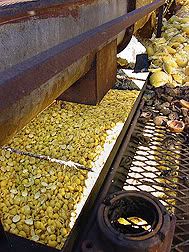 FPL Energy, LLC, a subsidiary of FPL Group, today announced that it has signed a letter of intent with Citrus Energy, LLC, of Boca Raton, Florida, to develop a commercial scale biorefinery that will convert citrus waste to cellulosic ethanol.
 energy :: sustainability :: ethanol :: biomass :: bioenergy :: biofuels :: cellulosic :: citrus :: Florida ::
 E.ON UK, an arm of German energy giant E.ON,
 Now that the EU is accepting the vision that it will have to import biofuels, the need for 'bioports' is becoming more tangible. The Netherlands and Belgium, with their many sea ports, are preparing for the creation of such logistical hubs that will import, store, process and distribute solid and liquid biofuels and bioenergy feedstocks (







Friday, July 20, 2007
Green Power Generators unveils dedicated biodiesel gensets for entertainment industry
GPG has chosen to highlight designs first for members of the entertainment industry, but the generators will be of equal interest for any business that involves high energy consumption. To make its case, GPG refers to a 1998 biodiesel lifecycle study, jointly sponsored by the U.S. Department of Energy and the U.S. Department of Agriculture, concluded biodiesel reduces net carbon dioxide emissions by 78% compared to petroleum diesel.
Quick Facts about the biodiesel generators:
- GPG generators feature Cummins Tier-3 engines that meet the most stringent emissions standards set forth by the EPA. Only 1% of generators currently used are Tier-3.
- generators are rated to operate smoothly in high and low temperatures.
- feature Movie Quiet design utilizing a three-stage insulation process for sound reduction.
- analog engine controls with individual digital meters for amps, voltage and hertz allow for reliability and ease of operation.
- GPG’s generators feature Dual-Redundant voltage regulators with a changeover switch. If one regulator fails, the user can switch over to a second regulator within seconds.
- electric priming feature that allows the engine to be primed of fuel within minutes.
- variable speed hydraulic fan drive utilizing synthetic hydraulic fluid allow for a reduction in change intervals.
In its annual report card issued in November 2006, the UCLA Institute of the Environment put the film industry number two behind the Aerospace industry on the list of industry pollution offenders in California. The potential benefits of GPG’s new generators for the industry are welcomed by environmental experts.According to Alton Butler, co-founder of GPG and president of Line 204 Studios, GPG’s parent, the industry standard tier-2 diesel engines are not qualified to burn biodiesel. The available industry standard diesel-engine generators can burn only up to 5% bio-diesel (B5). Burning a higher percentage risks losing operators to lose the warranty on the genset. Currently productions don’t have an option for burning cleaner fuels:
According to Debbie Levin, president of the Environmental Media Association, "Very few options exist for producers who want to reduce the emissions on their sets. GPG presents a formidable option that should be a no-brainer not only for Hollywood but for any industry that outsources power."
GPG has their own supply of biodiesel fuel, as well as transportation, utility and re-fueling trucks that run on fuel from the same source, ensuring that all measures are taken to prevent unnecessary carbon emissions.
Article continues
posted by Biopact team at 3:57 PM 0 comments links to this post