
 Anglo-Dutch oil giant Royal Dutch Shell PLC has suspended the export of 150,000 barrels per day of crude oil because of community unrest in southern Nigeria, a company spokesman said. Villagers from K-Dere in the restive Ogoniland had stormed the facility that feeds the Bonny export terminal, disrupting supply of crude. It was the second seizure in two weeks. Shell reported on May 15 that protesters occupied the same facility, causing a daily output loss of 170,000 barrels.

Carbon credits for Chennai Metrowater's biogas project
Quicknote CDM
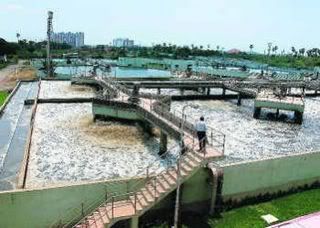 Chennai Metrowater, the main water supply and treatment organisation in this south Indian city of 7 million inhabitants, is set to receive 40 million rupiah (€734,000 / US$987,000) annually from the UN's Clean Development Mechanism for its environment-friendly biogas project.
The financial incentive supports the development of renewable bioenergy from the waste-water treatment facilities that help reduce carbon dioxide emissions and offsets the use of fossil fuels. The water agency would be presented carbon credits for generating electricity from biogas to operate its sewage treatment plants in the city. The certification of carbon credits is expected in about six months.
The credits can be used by the water agency to attract foreign investment and technology to reduce emissions of greenhouse gases that cause global warming, as envisaged by the Kyoto Protocol. The United Nations Framework Convention on Climate Change based in Bonn, Germany, created the concept of issuing certificates of carbon credits to developing countries that reduce their emissions, credits that can then be bought by organisations in highly industrialised countries to meet their emission reduction obligations.
Metrowater saves about US$1 million a year by generating sufficient electricity from biogas from sewage sludge in four of its plants at Koyambedu, Nesapakkam, Kodungaiyur and Perungudi. The biogas project was initiated in 2005 [entry ends here].
 bioenergy :: biofuels :: energy :: sustainability :: waste-water :: biogas :: carbon credits :: Chennai :: India ::
Chennai Metrowater, the main water supply and treatment organisation in this south Indian city of 7 million inhabitants, is set to receive 40 million rupiah (€734,000 / US$987,000) annually from the UN's Clean Development Mechanism for its environment-friendly biogas project.The financial incentive supports the development of renewable bioenergy from the waste-water treatment facilities that help reduce carbon dioxide emissions and offsets the use of fossil fuels. The water agency would be presented carbon credits for generating electricity from biogas to operate its sewage treatment plants in the city. The certification of carbon credits is expected in about six months.
The credits can be used by the water agency to attract foreign investment and technology to reduce emissions of greenhouse gases that cause global warming, as envisaged by the Kyoto Protocol. The United Nations Framework Convention on Climate Change based in Bonn, Germany, created the concept of issuing certificates of carbon credits to developing countries that reduce their emissions, credits that can then be bought by organisations in highly industrialised countries to meet their emission reduction obligations.
Metrowater saves about US$1 million a year by generating sufficient electricity from biogas from sewage sludge in four of its plants at Koyambedu, Nesapakkam, Kodungaiyur and Perungudi. The biogas project was initiated in 2005 [entry ends here].
bioenergy :: biofuels :: energy :: sustainability :: waste-water :: biogas :: carbon credits :: Chennai :: India :: 







0 Comments:
Post a Comment
Links to this post:
Create a Link
<< Home